


Bergamas House in Gradisca d’Isonzo


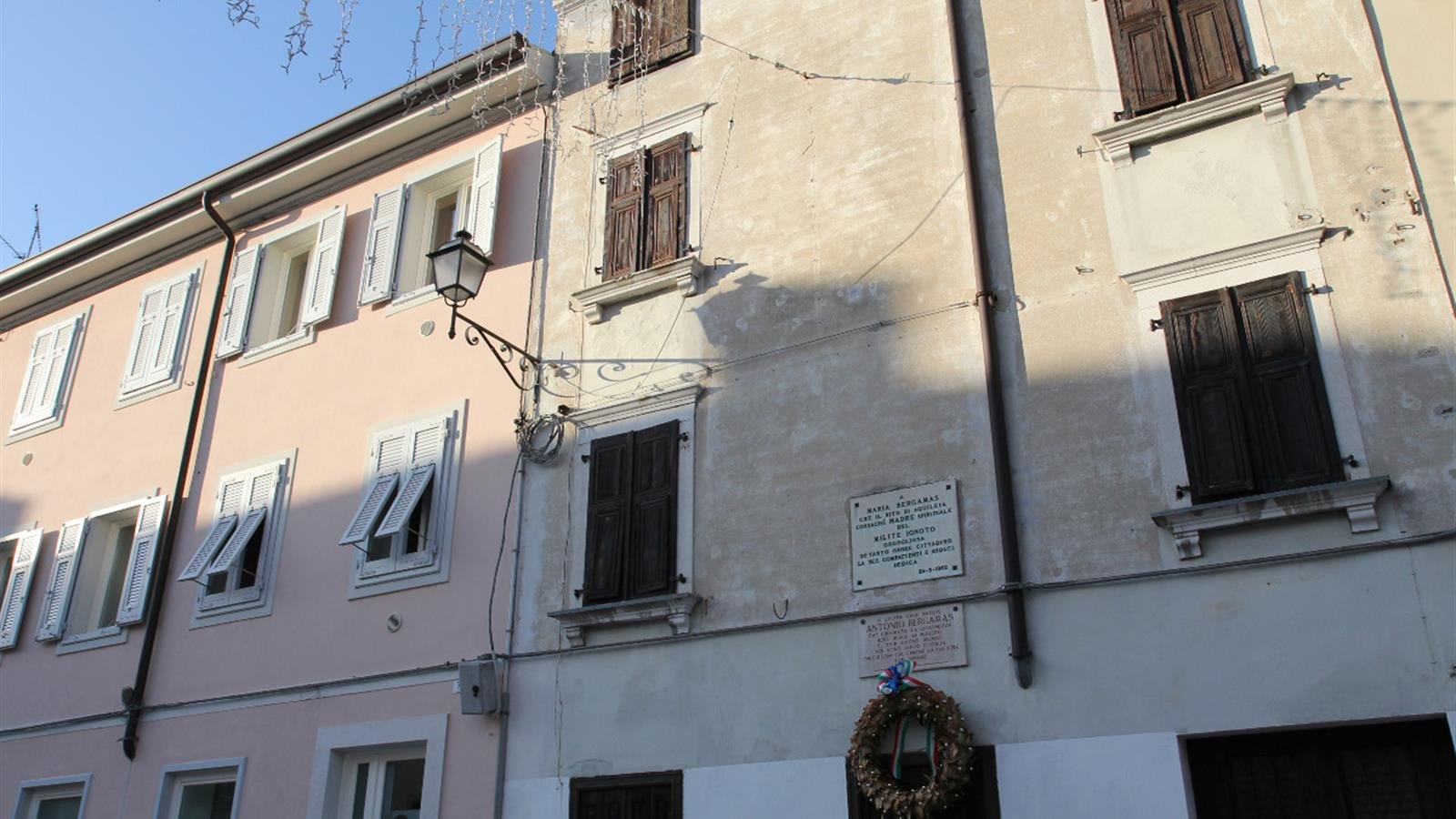
At the end of the First World War, many nations adopted patriotic symbols to commemorate the countless soldiers who had fallen without being identified.
Within this context emerged the figure of the Unknown Soldier: the coffin of an unnamed serviceman symbolically representing all those missing on the battlefields. In Italy, the ceremony for the selection of the body took place in Aquileia on 28 October 1921. From there, the coffin was transported by train to Rome in a journey marked by profound public emotion, before being interred at the Altar of the Fatherland, the monumental memorial dedicated to the first king of Italy in Piazza Venezia.
Charged with equally powerful symbolic and emotional significance, the task of choosing the coffin destined for the capital was entrusted to Maria Bergamas, the mother of a young irredentist who had gone missing during the war. Although living in Trieste at the time, Maria originally came from Gradisca d’Isonzo, a town a few kilometres from Gorizia and the battlefields of Mount San Michele and the Sei Busi. Her son Antonio, who had also been born there, died in 1916 near Mount Cimone on the Asiago plateau.
The house where Maria and Antonio Bergamas lived before moving to Trieste still stands in Gradisca d’Isonzo at Via Bergamas 37. A commemorative inscription recalls that: “In this house was born Antonio Bergamas who, having illuminated his youth with the ideal of Mazzini, on the eighteenth day of June 1916, in the holy name of Italy, sealed his faith with blood on Mount Cimone.” The house can easily be reached from Piazzale Unità d’Italia, near the Column of Redemption.

Information
Via Bergamas, 37
I-34072 Gradisca d'Isonzo (GO)