The First World War
1914 – 1918
1914
1914
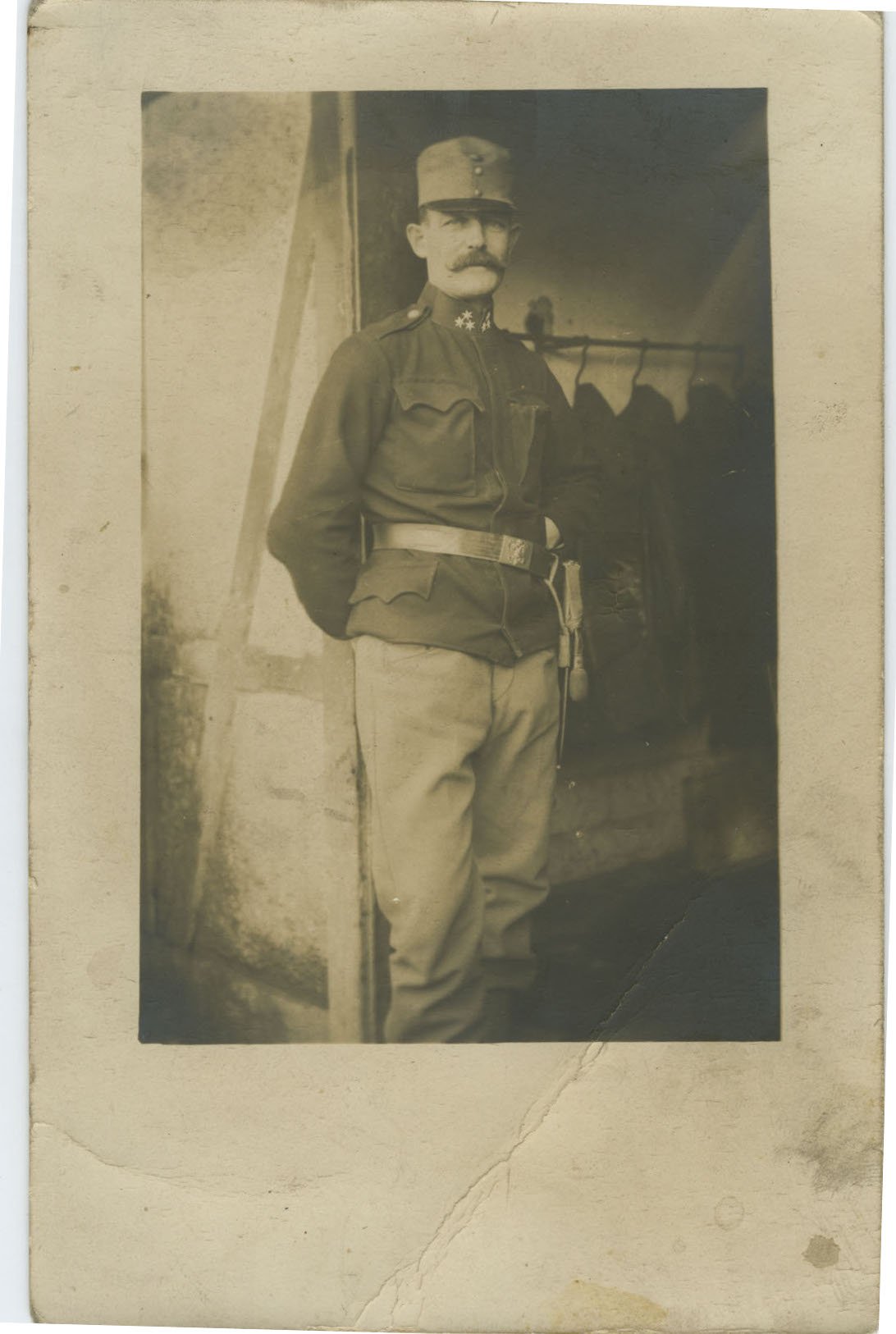
The beginning of the First World War
28 June 1914 has gone down in history as the day of the Attack in Sarajevo. Archduke Franz Ferdinand, heir to the throne of the Austro-Hungarian Empire, and his wife Sophie were killed by Gavrilo Princip, a member of the pro-Serbian nationalist organisation “Mlada Bosna” (“Young Bosnia”). The episode, the result of tensions that had involved the Empire and Serbia for years, triggered the crisis that would lead to the outbreak of war. Following the assassination, the situation rapidly escalated: on 28 July Emperor Franz Joseph signed the declaration of war against Serbia and Montenegro. This marked the beginning of the global conflict. Within a few weeks, because of the alliances forged in the late nineteenth century, the main European powers entered the war: on one side Russia, France and Great Britain of the Triple Entente; on the other Germany and the Austro-Hungarian Empire, united by the Triple Alliance. Conspicuously absent, at least at this stage, was Italy, which, although formally tied to Austria and Germany, remained neutral, invoking the defensive nature of the Alliance.
Friuli Venezia Giulia at the beginning of the conflict
While Italy remained outside the conflict, part of what is now Friuli Venezia Giulia was already involved in the war. Trieste, the surrounding area, and the County of Gorizia and Gradisca all belonged to the Habsburg Empire. Young men from the region were immediately called up and sent to fight in Galicia and the Carpathians.
The widening of the conflict
The states at war soon realised that the conflict would not end quickly, contrary to their initial hopes. Within a few weeks the front lines stabilised and the conflict turned into a war of position. In the following months, new powers also entered the fray — the Ottoman Empire and Japan — extending the conflict to Asia as well: it had effectively become a world war.
1915
1915
Italy enters in World War I
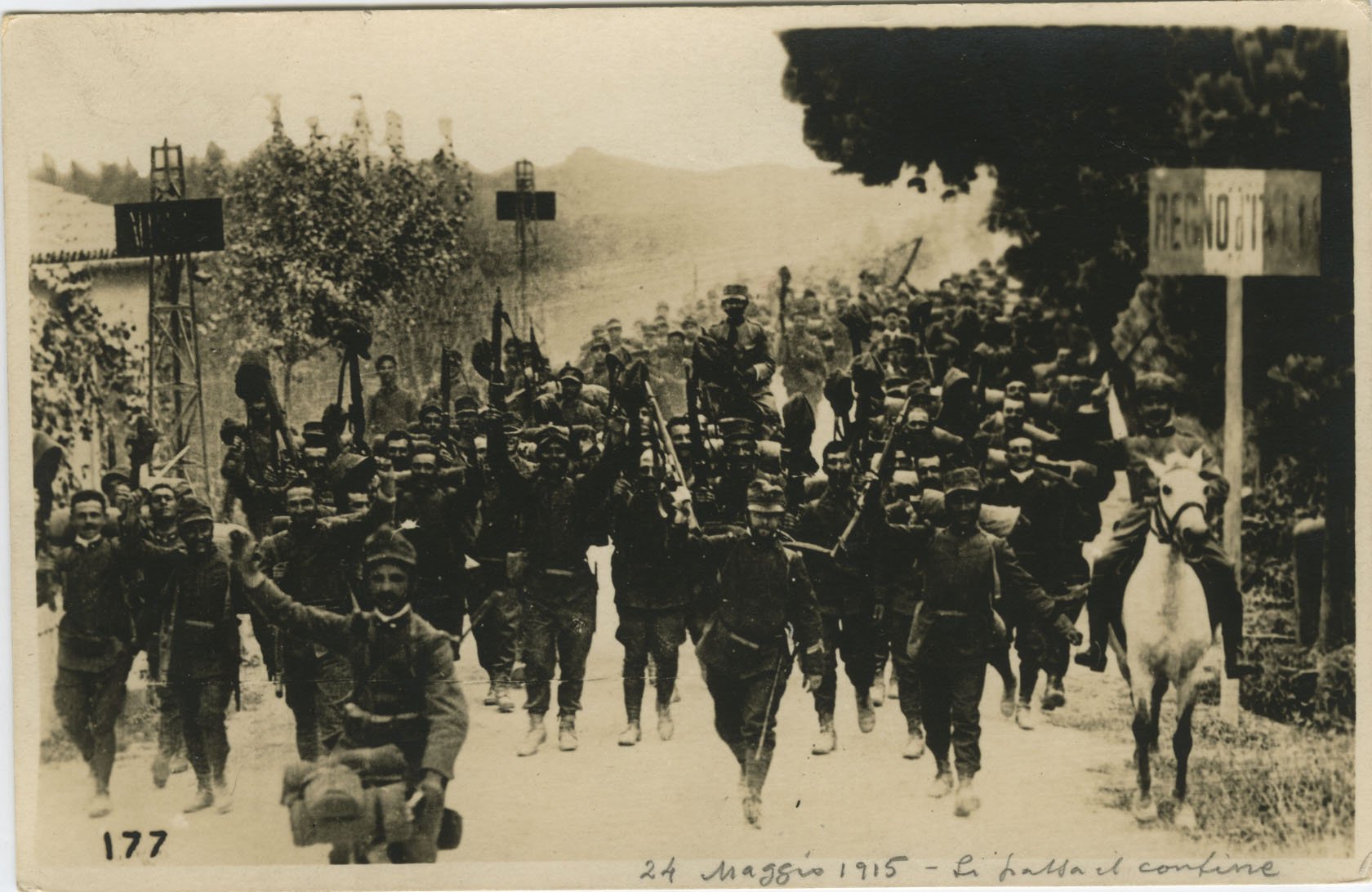
Given the static nature of the fronts, opening new ones became necessary in order to break the deadlock: Italy, still neutral, assumed a crucial role on the international chessboard. Austria-Hungary and Germany, aware of the territorial ambitions of the Kingdom of Italy, began negotiations: in March the Habsburg Empire showed itself willing to cede South Tyrol, but not Trieste. For this reason, the talks came to a halt. Meanwhile, Italy began secret negotiations with the Triple Entente, which wanted to open a new front and tie down the allied powers. After several months of talks, the Treaty of London was secretly signed on 26 April: in exchange for entering the war, Italy would obtain a series of territories it had long aspired to, including South Tyrol, Trentino, Gorizia, Gradisca, Trieste, and the entire Istrian peninsula up to the Gulf of Quarnero. Italy therefore began preparations for entering the war. A plan of attack and containment was drawn up from Stelvio Pass (on the border between Lombardy and Alto Adige/South Tyrol) to the eastern area of the Friulian plain, for a total of about 600 kilometres divided into five sectors. On 23 May Italy declared war on Austria-Hungary and, the following day, the army crossed the border, beginning operations especially in eastern Friuli.
The Isonzo front
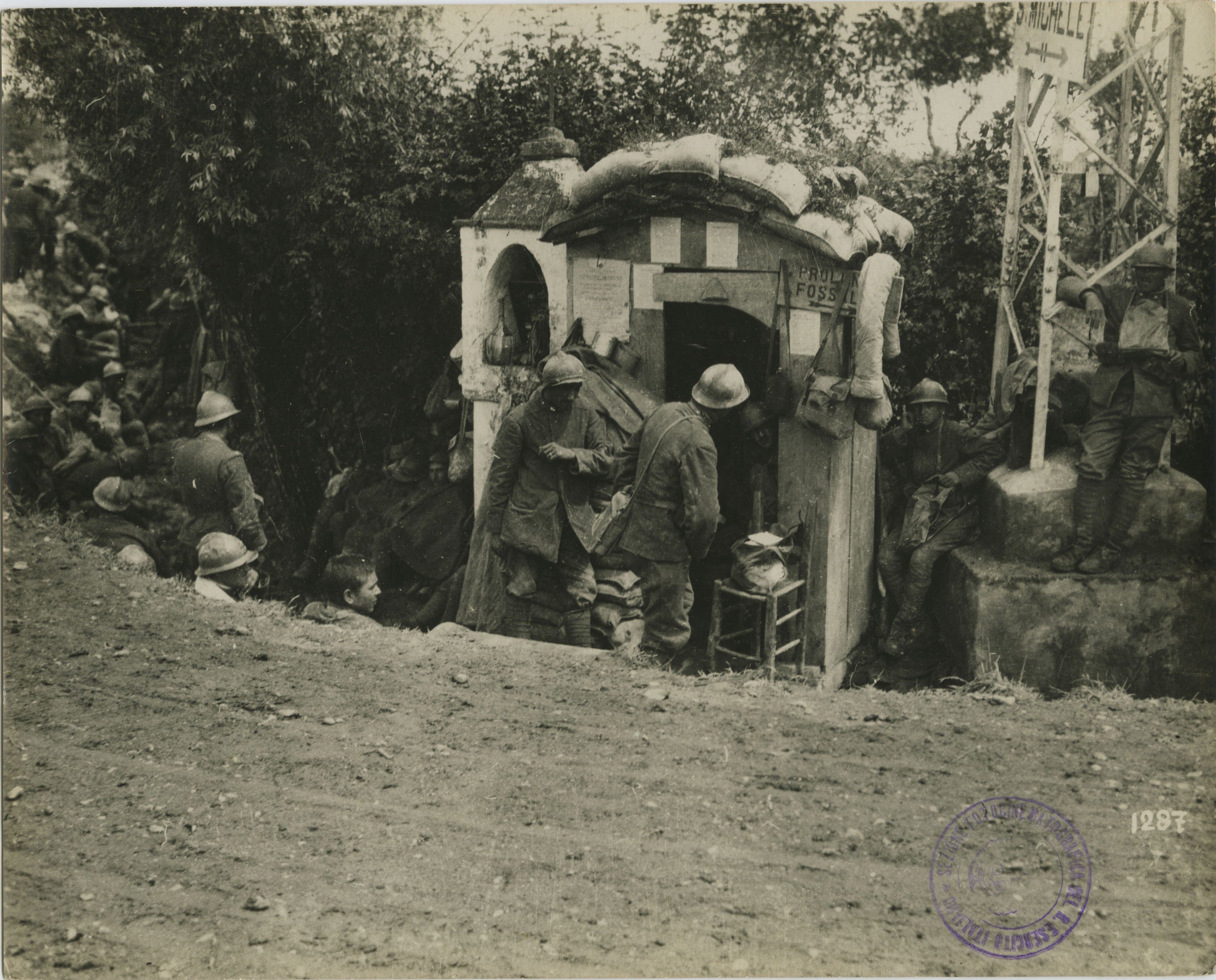
In the middle and lower Isonzo area, the initial objective was to isolate Gorizia by reaching Monfalcone to the south and the Caporetto basin to the north. The Italians organised a first attack on Monte Calvario, near Gorizia, but in the hilly area surrounding the city the Austrian defences had already been set up and repelled the offensive. The Italian advance proved ineffective and poorly organised: it soon became clear on this front as well that the lines would remain virtually immobile, turning into a gruelling trench war.

Mountain warfare
In the summer of 1915, fighting also began in the Julian Alps and in Carnia. The Austro-Hungarian army armed the forts at Malborghetto (Fort Hensel) and near Lake Raibl (Predil), which were then bombarded by the Italians. In July, the Gemona Alpini Battalion captured Forchia di Cjanalot and Pizzo Orientale, thus creating — together with Jôf di Miezegnot and nearby Jôf di Somdogna — an excellent control area along the border. In Carnia, clashes were concentrated near the Passo di Monte Croce Carnico: the Alpini occupied Pal Piccolo and Pal Grande, while the Feldjäger held the Freikofel. Both armies aimed to seize each other’s peaks, but without achieving significant results. Here too, the conflict soon turned into an exhausting war of position. The Carnic front is also known for the mobilisation of civilian women — the Carnic porters — who, for payment, carried food and ammunition from the valley up to the front lines high in the mountains.
The first four Battles of the Isonzo
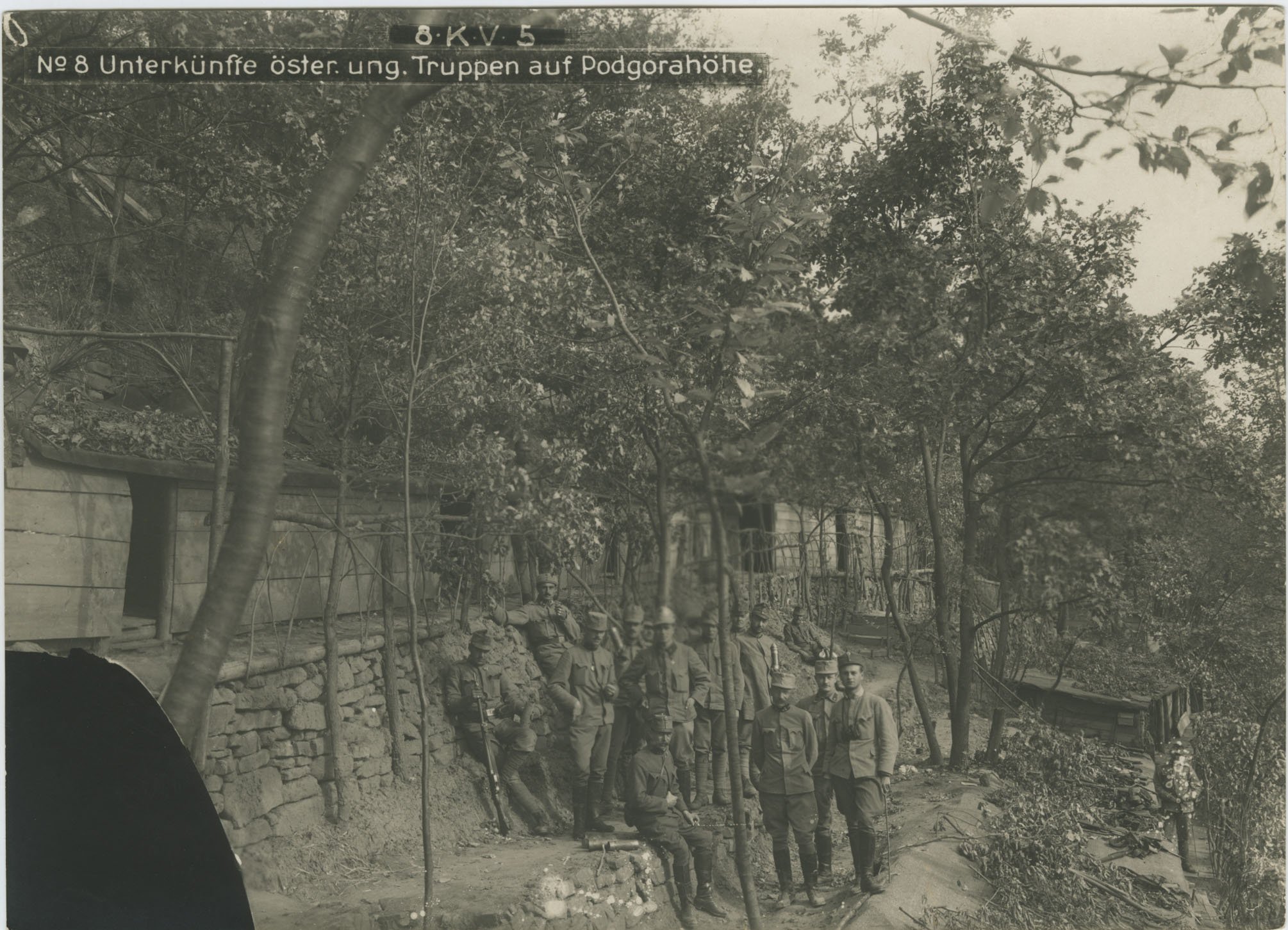
Between June and November, the first four Battles of the Isonzo were fought: offensives launched by the Italian army in an attempt to reach Gorizia and Trieste. The battles involved a front of about 36 kilometres, from Monte Calvario and Sabotino near Gorizia, through Monte Sei Busi and Monte San Michele, to the heights near Monfalcone, including Monte Cosich. None of these battles produced significant results, with the sole exception of the capture of Monte Sei Busi after the third battle. The First Battle of the Isonzo ended with 3,500 dead and 11,500 wounded on the Italian side; the subsequent ones caused the deaths of tens of thousands of men on both sides. The poor results achieved in the face of such enormous losses, compounded by the exhausting life at the front, crushed the morale of Italian soldiers already in the first months of a war that would last for years.
The rearguard in Friuli
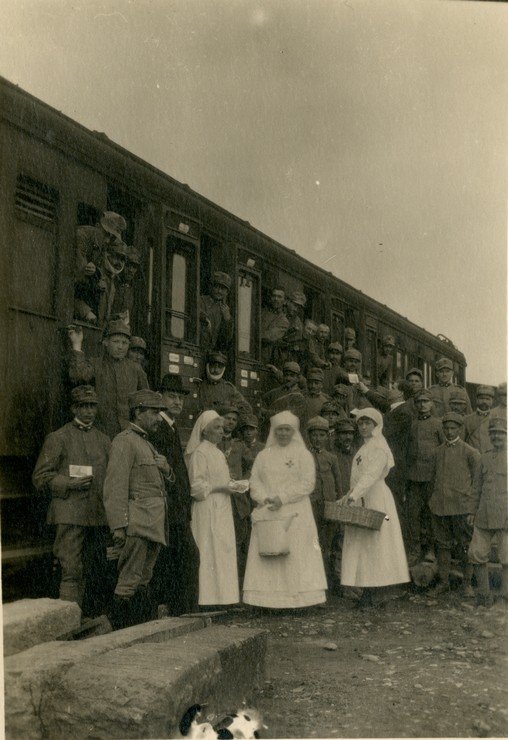
Amid all this, western Friuli was transformed into a vast rearguard: 1.5 million soldiers were quartered here. Udine was chosen as the seat of the Supreme Command of the Italian Army and thus became the “Capital of the war”. The town housed the army’s command, logistical and medical centres. King Victor Emmanuel III took up residence in Torreano di Martignacco, at Villa Linussa (Villa Italia), and between 1915 and 1917 carried out daily inspections of the front lines. On 20 August Udine suffered its first aerial bombardment by enemy forces.
1916
1916
The White War
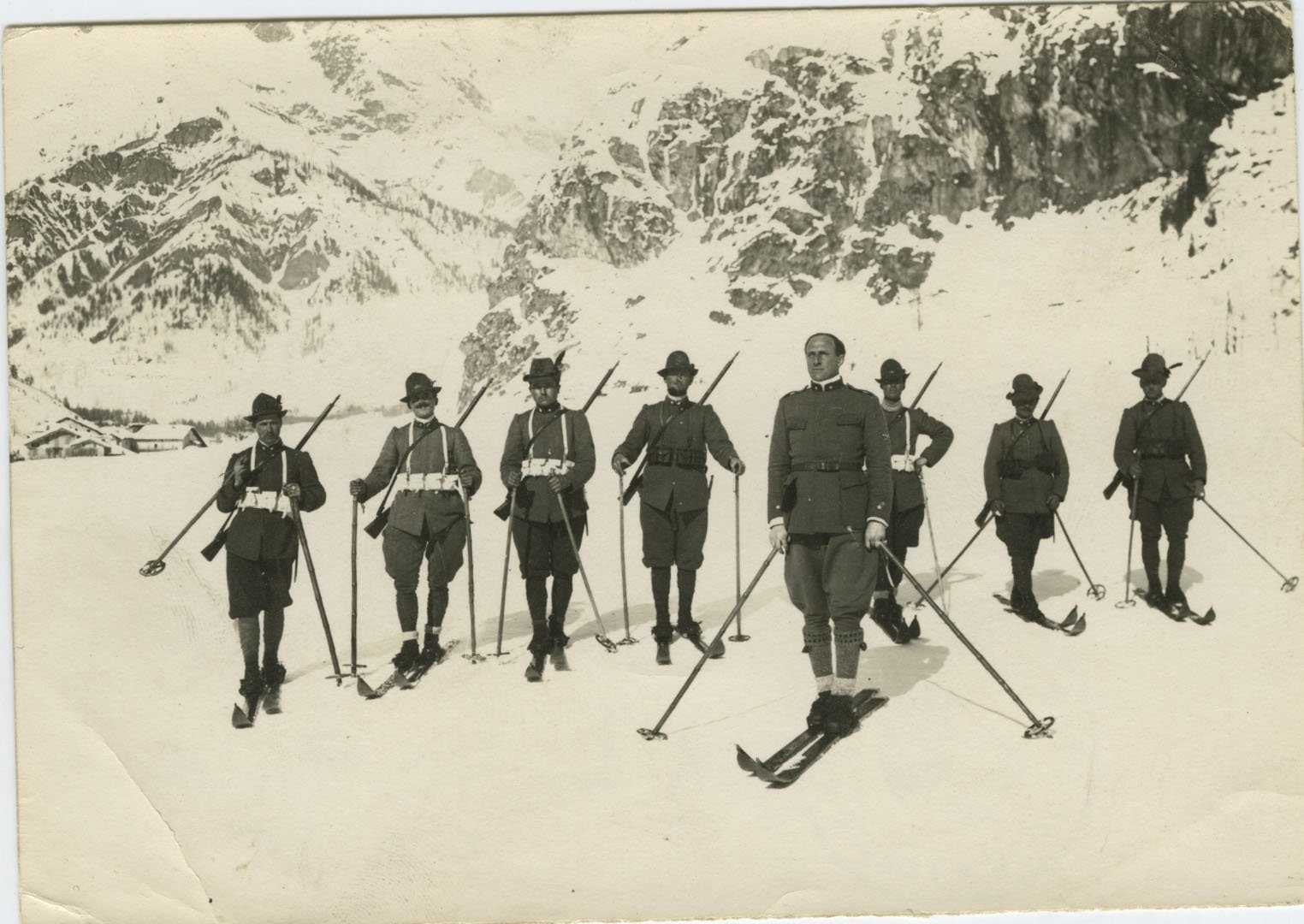
The harsh winter temporarily interrupted operations on the Isonzo front and on the mountain fronts. The military high commands took advantage of the situation to reorganise their armies and agree on new plans of action. In March, the Fifth Battle of the Isonzo began. The objectives and outcomes remained unchanged: no gains at the cost of 13,000 dead. In the same month, the Austro-Hungarian army launched an offensive on Pal Piccolo and Pal Grande with the aim of breaking through the line and reaching Timau, in the Italian rear. The clashes lasted three days, from 26 to 29 March, until the Austro-Hungarians realised they could not sustain the effort and fell back, allowing the Italians to reoccupy Pal Piccolo. Meanwhile, the peaks in Veneto and between Lombardy and Trentino also became the scene of numerous clashes: this marked the beginning of what came to be known as the “White War”, fought in extreme conditions amid snow and glaciers.
The Strafexpedition and the Italian counteroffensive
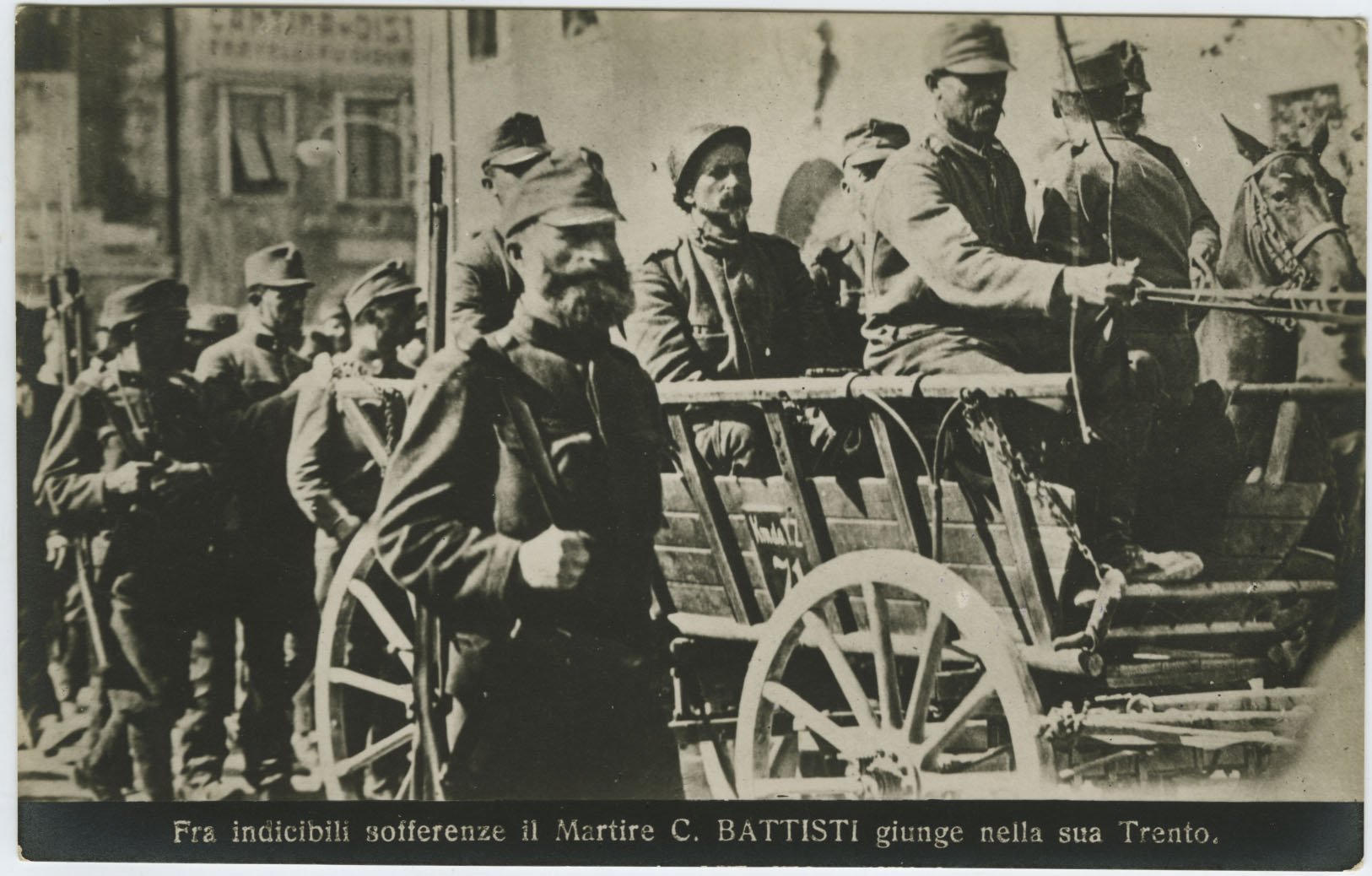
On 15 May 1916, the Strafexpedition began: the Austro-Hungarian Empire’s “punitive expedition” against the “Italian traitors”. Cadorna, head of the Italian Supreme Command, was caught off guard because he was convinced that the Austro-Hungarian army would limit itself to defending its own positions and would never attempt an offensive. Within a few days Monte Zugna south of Rovereto, Col Santo, Monte Maggio and Monte Toraro south of Folgaria were occupied by the Austro-Hungarian army, which managed to advance as far as the Asiago Plateau. In addition to the many losses, numerous soldiers were captured. Among them were the Trentino irredentists Cesare Battisti and Fabio Filzi who, once identified, were tried and hanged for high treason in Trento.The Austro-Hungarian action came to a halt in June because of a lack of men. Cadorna took advantage of this to organise a counteroffensive that continued for over a month. The advance achieved partial and temporary success, but in the end the Austro-Hungarian defence proved impenetrable. In this sector too, therefore, the front became an immobile line and the conflict turned into a war of attrition.
The phosgene attack on Monte San Michele
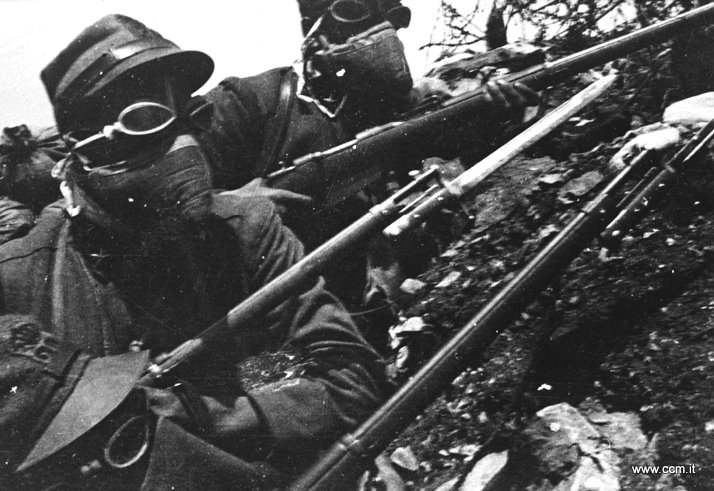
Meanwhile, on Monte San Michele the Austro-Hungarian army experimented with a chemical weapons attack: on 29 June, the Italian trenches were hit by phosgene shells. The Italian army did not have equipment adequate to protect itself from such an attack, and about two thousand soldiers died within minutes. Another five thousand were poisoned. However, Habsburg soldiers also suffered the consequences of this operation: shortly after the attack, the wind changed direction and carried the toxic cloud into their ranks, causing hundreds of deaths and over a thousand cases of poisoning. Despite the heavy human losses, there was no change in the front lines.

The Sixth Battle of the Isonzo and the capture of Gorizia
Having overcome the threat of the Strafexpedition, Chief of Staff Luigi Cadorna, together with Duke of Aosta Emanuele Filiberto, commander of the Third Army, began planning a new offensive along the Isonzo front, preceded by intense bombardment near Gorizia. Thus, on 6 August, the Sixth Battle began. The operation was an immediate success: the Habsburg troops lost control of Monte San Michele and Sabotino. Deprived of these strategic heights, the line defending Gorizia also collapsed rapidly. On the night between 7 and 8 August, the Italians also captured Calvario. Deprived of its defences, the city was reached and crossed by Italian soldiers over the Isonzo. In the city, heavily damaged by Italian artillery bombardment, only 3,200 civilians remained. A famous episode concerns a young non-commissioned officer, Aurelio Baruzzi, who was granted permission to swim across the river to carry the Italian flag to the other bank. Within minutes he reached the southern railway station, now Gorizia Centrale, and hoisted the flag, sealing the capture of Gorizia: it was the first tangible victory achieved after 15 months of war. The operation continued for ten days. The Habsburg troops commanded by Borojević, aware that they would not have been able to withstand any further attacks, withdrew, abandoning several strategic positions such as Monte Sei Busi, the area of Doberdò del Lago and Monte Cosich, north of Monfalcone. The fighting caused the loss of about one hundred thousand men — dead, wounded and missing — in the ranks of both sides.

The Seventh, Eighth and Ninth Battles of the Isonzo
Buoyed by these gains, in September Cadorna prepared a new attack on the Isonzo front. On 14 September the Seventh Battle of the Isonzo began: the first Austro-Hungarian defensive line was destroyed, but no changes occurred on the front despite the heavy losses. The situation remained practically unchanged during the Eighth Battle of the Isonzo as well, fought between 30 September and 11 October: the Italian army reached the village of Iamiano, near Doberdò del Lago, but was unable to hold the position. In this case too, there were heavy losses in the face of a futile operation.Meanwhile, the Austro-Hungarian army had begun work on a new defensive line on Monte Ermada, a height in the Trieste Karst, with the aim of preventing the Italian army from reaching Trieste at all costs. On 1 November, the Italian Third Army and the Toscana Brigade attempted a new breakthrough of the Austro-Hungarian defensive lines near Doberdò, beginning the Ninth Battle of the Isonzo. Despite an initial victory, however, they failed to capture a decisive position and therefore to collapse the front. On 4 November Cadorna suspended the attack: there were too few men to sustain the operation and the soldiers’ morale was beyond recovery. In particular, a sense of the futility of all those losses spread: soldiers at the front saw their comrades dying by the thousands without this producing any tangible result.
The crisis of the Austro-Hungarian Empire
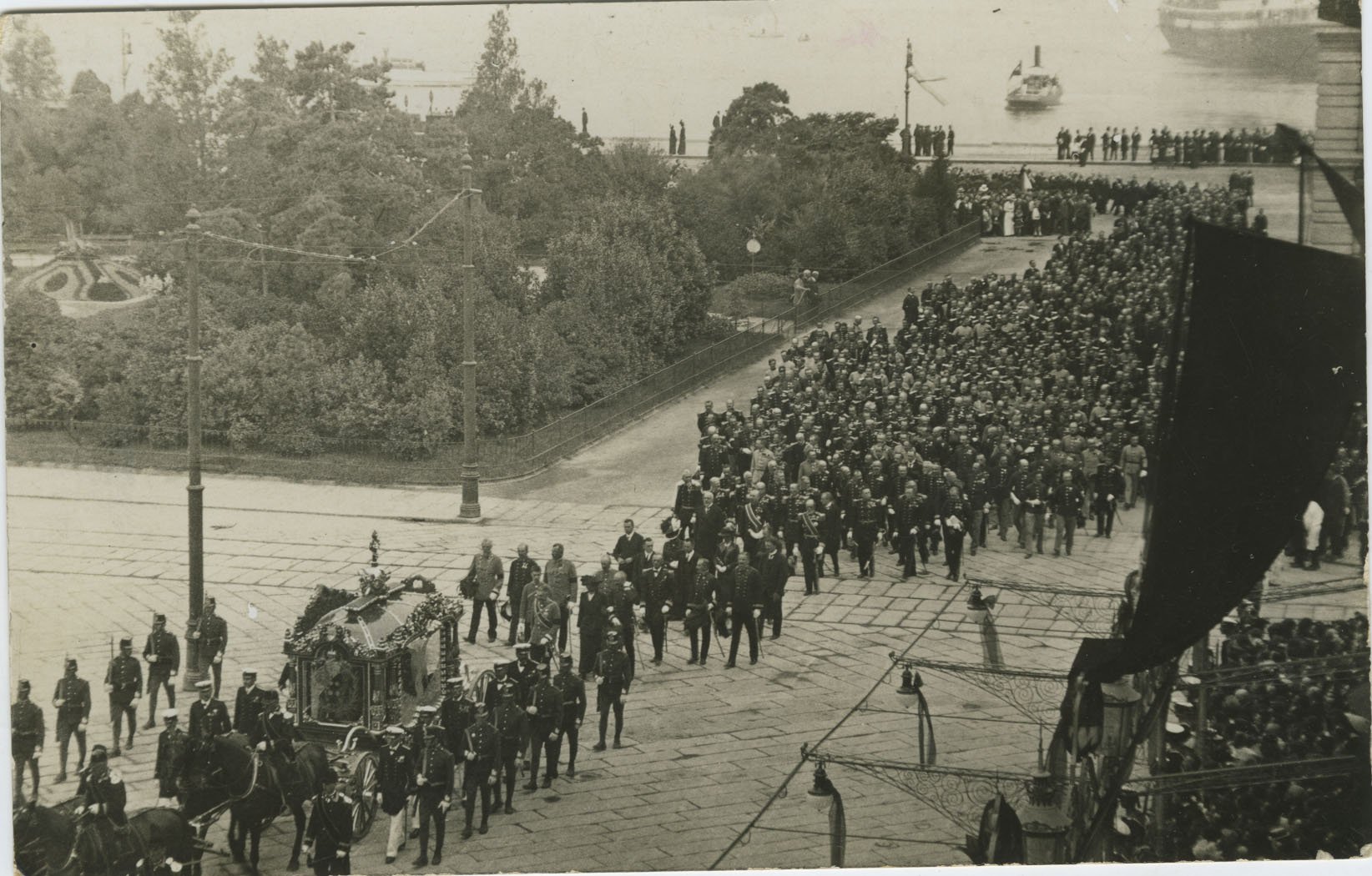
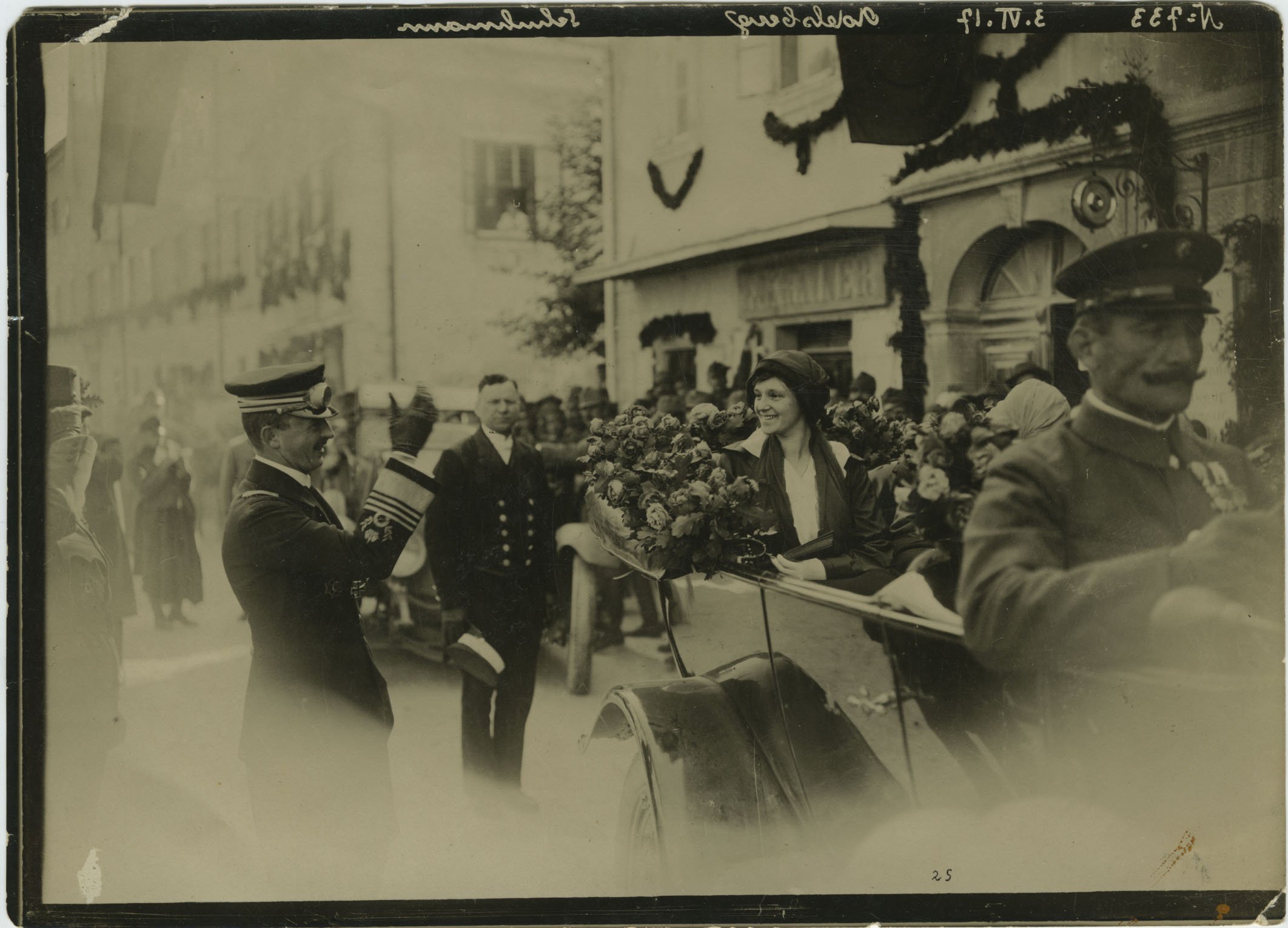
On 21 November, Emperor Franz Joseph of Austria-Hungary died, and with his death the fragility of the Empire became evident, shaken by both a military and a civil crisis. His successor, Charles I, decided to open a dialogue with France and Britain in order to prepare a possible separate peace. He put forward a proposal that, however, included no concessions to the Kingdom of Savoy. The Italian Foreign Minister Sidney Sonnino was informed and invited to meet with the Austro-Hungarian representatives to formulate a counterproposal. Italy remained adamant: it would renounce none of the claims set out in the Treaty of London. The attempt to reach peace therefore stalled.
1917
1917
The international scene: Russia and the United States
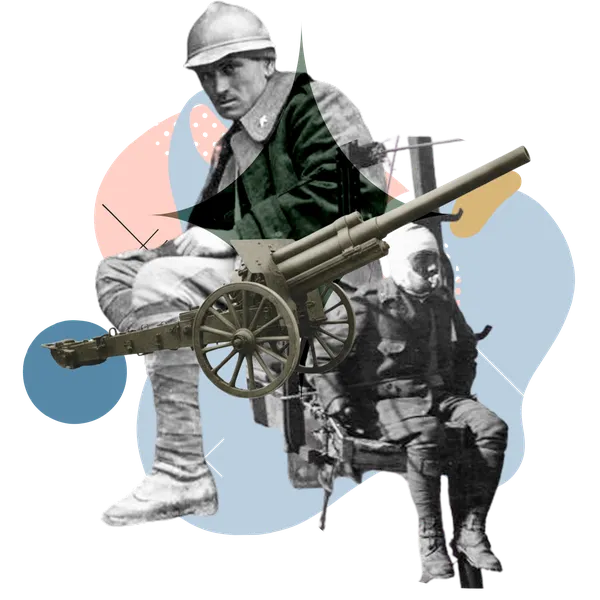
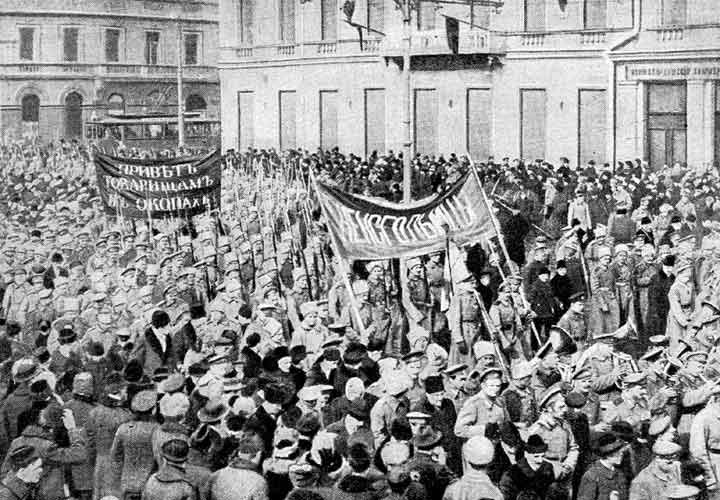
1917 opened with one of the harshest winters of the entire twentieth century, forcing the armies on all fronts into a pause. By contrast, the international situation outside the battlefields changed rapidly. Russia, shaken by internal tensions and revolts and by the deposition of the Tsar, began preparing its exit from the war. Meanwhile, Germany announced its intention to wage submarine warfare in the Atlantic Ocean. This declaration mobilised the United States which, in April, declared war on Germany.

The Tenth Battle of the Isonzo
On the Isonzo front, fighting resumed in late spring: Cadorna’s objective was to lay the groundwork for the capture of Trieste. The Tenth Battle of the Isonzo began on 12 May with the aim of breaking through the defences of Hill 383 near Plava, Monte Santo and Ermada. The results were mixed: the Italians captured Hill 383 and moved towards Monte Kuk, which was taken and lost again within a few hours. The summit was captured on 17 May, but the Italians failed to advance towards Monte Santo. The operation was therefore suspended on 20 May. The Italian bombardment resumed with great intensity on 23 May: the army managed to break through the lines and, on 24 May, the Toscana Brigade reached the mouths of the Timavo. This area became the stage for an operation destined to fail, conceived by Gabriele d’Annunzio: the plan was to cross the river, capture Hill 28 and advance towards Duino Castle, where the Italian flag was to be raised. The intention was to induce the Italians of Trieste to rise up against the Habsburg authorities. In reality, the flag would have been invisible from such a long distance (about 20 km separate Duino and Trieste) and the advance was almost impossible because of the many defences in the area. The plan was carried out nonetheless: the soldiers of the Toscana Brigade who managed to reach Hill 28 remained trapped and isolated there. Some decided to mutiny, while the rest of the troops withdrew amid Austro-Hungarian gunfire: several men died, including Giovanni Randaccio, the brigade commander. Thus the Tenth Battle of the Isonzo ended with yet another failure. On 3 June, the Austro-Hungarian army organised a counteroffensive: the coordinated attack of bombardment and infantry forced the Italians to retreat by more than a kilometre, thus nullifying the little ground won in the tenth battle.

The Eleventh Battle of the Isonzo
Aware that Monte Ermada was well defended by the Habsburg army, Cadorna decided to concentrate the offensive in the area between Gorizia and Tolmin. Half a million soldiers were deployed on the Bainsizza Plateau: on 19 August the Eleventh Battle of the Isonzo began. In a short time, the Second Army advanced onto the plateau, capturing 11,000 prisoners and taking dozens of cannons. On 24 August Monte Santo was captured very quickly. The ease with which the operation unfolded surprised even the Supreme Command. However, the Bainsizza was characterised by terrain that was difficult to cross with heavy weapons, and Monte San Gabriele was well defended by the Austro-Hungarian army. This last objective was not achieved and the operation was suspended on 29 September. The ease with which the Italians managed to penetrate the Bainsizza Plateau was not, however, accidental. The Austro-Hungarian army had in fact withdrawn, hoping that the nature of the terrain would slow the Italian advance, in order to reorganise near Tolmin.

The Twelfth Battle of the Isonzo
Meanwhile, Germany decided to intervene in support of its Habsburg allies: both powers were aware that the Austro-Hungarian army would not have been able to withstand further Italian offensives on the Isonzo front if left on its own. Germany and Austria-Hungary therefore organised an offensive between Plezzo (today Bovec) and Tolmino with the aim of pushing the Italians back to the pre-war border line and eventually reaching the Tagliamento. The attack was prepared quickly and numerous German soldiers reached the front in secret. In autumn, Italian officers became convinced that no further fighting would take place until the following spring, to the point of underestimating the accounts of Austro-Hungarian deserters who spoke of a great concentration of men and weapons between the Plezzo and Tolmino area. The Italian army was therefore not prepared to defend the area and continued to operate with an offensive mindset. At 2 a.m. on 24 October, the Austro-German guns opened fire. Within a few hours the first Italian line was isolated and, at 7 a.m., was attacked by Austro-German infantry. The Italian soldiers, caught unprepared and without official orders, offered no resistance and abandoned their positions. The German battalions reached and occupied Caporetto (today Kobarid) that very day.
The defeat of Caporetto
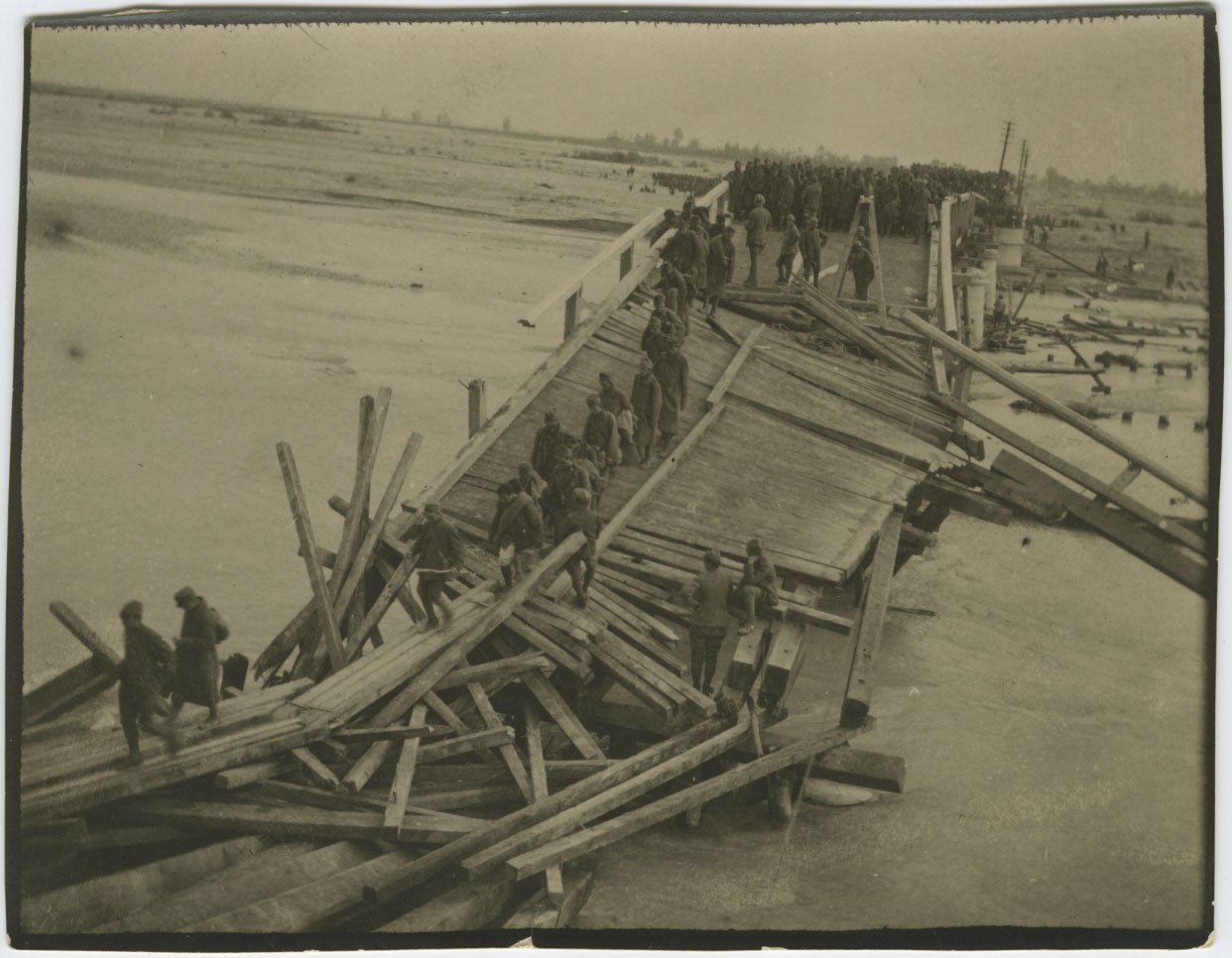
The Italians received orders only the following day: abandon all positions. The situation was desperate and many, now surrounded by the Germans, decided to surrender. The army led by Rommel easily reached the Kolovrat plateau and captured Mount Matajur, the highest peak of the Natisone Valleys. Cadorna moved the Supreme Command from Udine to Treviso. The Italian troops, lacking any guidance, retreated towards the Friulian plain. They were then ordered to fall back to the Tagliamento, where they were supposed to set up a new line. They were followed by the first Friulian civilians who abandoned their homes. The Austro-Hungarian army advanced at an astonishing speed as far as the Tagliamento, to the amazement of its own commanders. It encountered some attempts at resistance, such as those at Purgessimo, Cividale del Friuli, Forte del Monte Festa, Val Resia, and near Mortegliano, Pozzuolo del Friuli and present-day Basiliano. The order to halt the advance near the Tagliamento soon proved impracticable. On 31 October there was a desperate attempt to repel the Austro-German army at Monte di Ragogna and near the bridges of Pinzano and Cornino. The last attempt at resistance took place in the Battle of Pradis (5–6 November). Having understood the ineffectiveness of these actions, the troops were ordered to fall back towards the Piave, where they managed to establish and hold a solid defensive line that would become the new front. The heavy losses forced the Supreme Command to deploy immediately the infamous “class of ’99”, boys born in 1899 and therefore just eighteen years old. After brief training they were transferred along the Piave and kept separate from the units that had survived Caporetto: in this way they would not be influenced by the defeatism that in those days prevailed in the ranks of the army and in much of Italian society.
Occupied Friuli
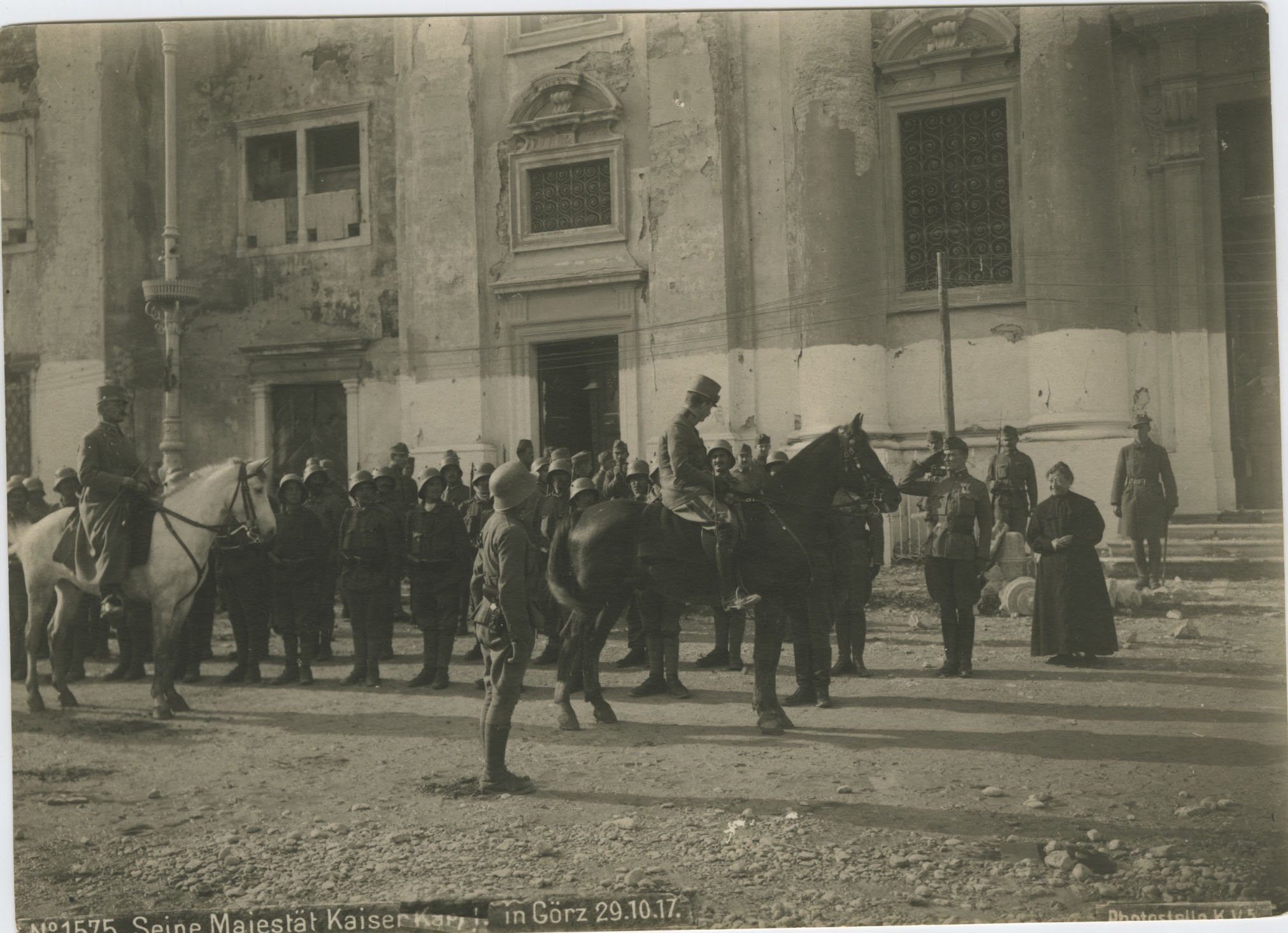
The Austro-Hungarian Supreme Command decreed that the occupation troops were to support themselves exclusively with the resources available in the occupied territories, and so numerous acts of looting followed one after another. The occupied Veneto-Friuli territory was administered by the Habsburg military authorities, and provisional local councils were established. Following the “Caporetto disaster”, Cadorna was replaced by Armando Diaz, who proved to be a skilled mediator and succeeded in dispelling the climate of terror that had spread.
1918
1918
Wilson’s Fourteen Points
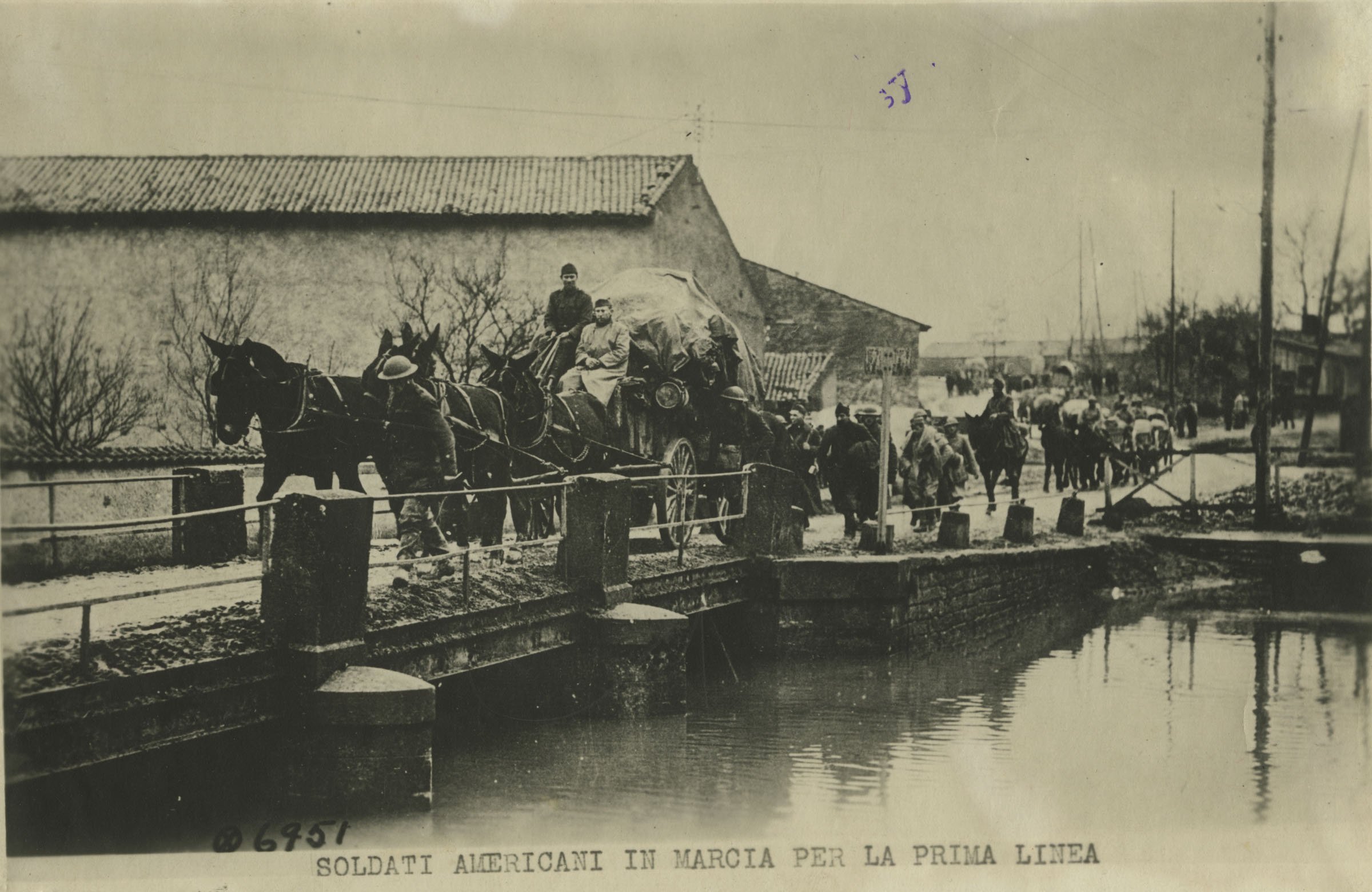
At the dawn of the new year, the international political landscape that formed the backdrop to the conflict also changed. Russia’s exit from the scene had led to the disclosure of the secret agreements of the Treaty of London: the territorial claims advanced by the Kingdom of Italy were thus made public, and these did not stop at the so-called unredeemed lands (Trento and Trieste) but revealed an imperialist ambition. In January, U.S. President Wilson delivered a speech in 14 points on the international relations that should be maintained at the end of the conflict; in particular, he criticised imperialist and colonialist policies and sided with peoples claiming the right to self-determination. This meant that, if the Austro-Hungarian Empire were to dissolve, the United States would support the birth of new nation-states and would therefore oppose Italian claims to Istria and Dalmatia.
The final months of the war
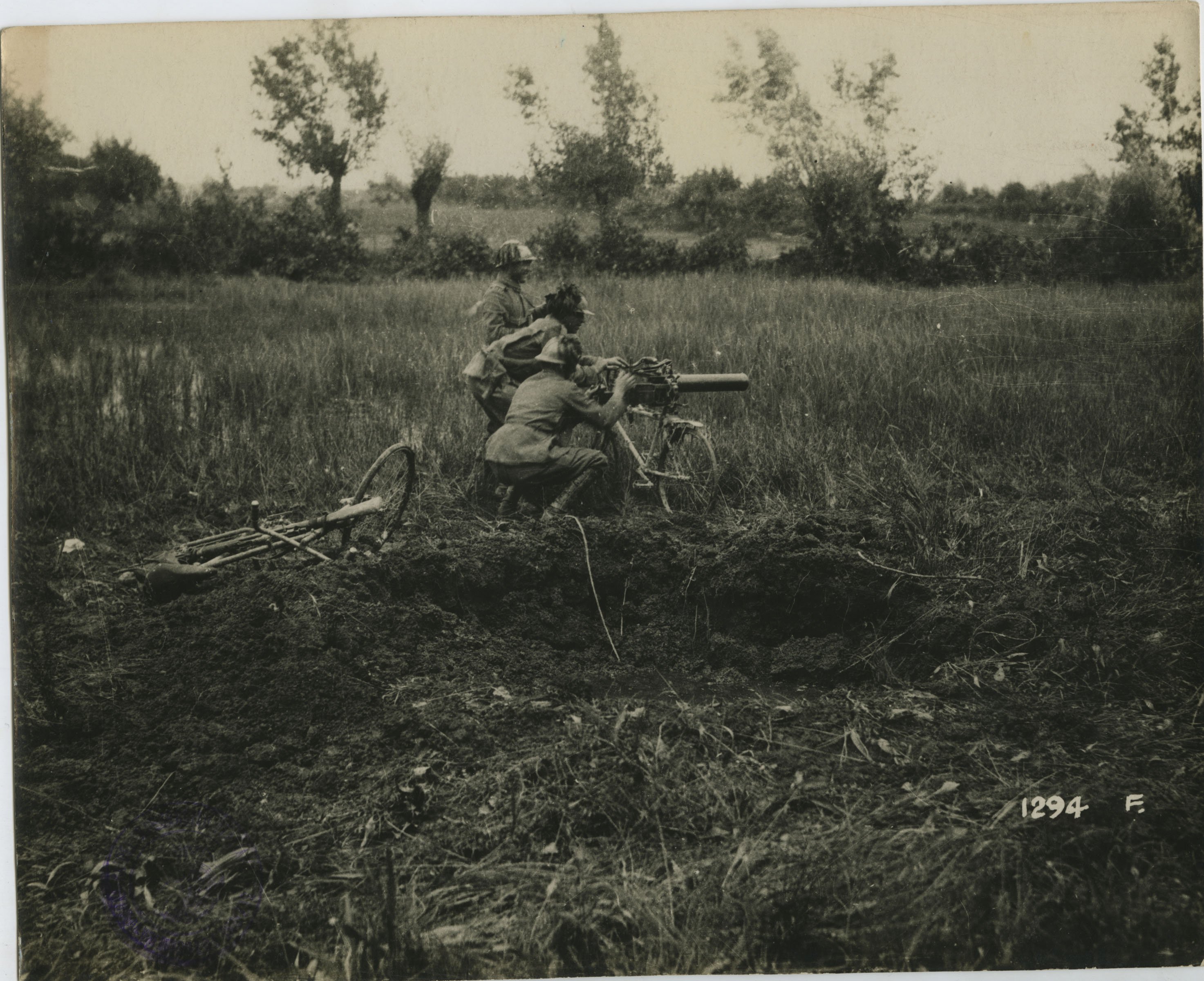
The final months of the war were fought in the western and central sectors: in the area between Lombardy and Alto Adige/South Tyrol and in Veneto. In spring, the Italian army managed to gain ground, especially on the Adamello massif. Meanwhile, Wilhelm II of Germany compelled Emperor Charles I to organise an offensive on the Italian front in support of German operations in France. Thus, on 15 June, the Battle of the Solstice began on the Asiago Plateau and, after an initial phase favourable to the Austro-Hungarians, proved inconclusive. The Italian army managed to halt the advance and defend the front line represented by the Piave.All the open fronts were therefore favourable to the Entente powers, and the idea that the war might soon end began to take hold. General Diaz was obliged to prepare an offensive: the aim was to break through the Austro-Hungarian defences and advance towards the Livenza. A joint attack on Monte Grappa and the Piave enabled the Italian army to catch the Austro-German troops off guard, forcing them to retreat.
The end of the First World War
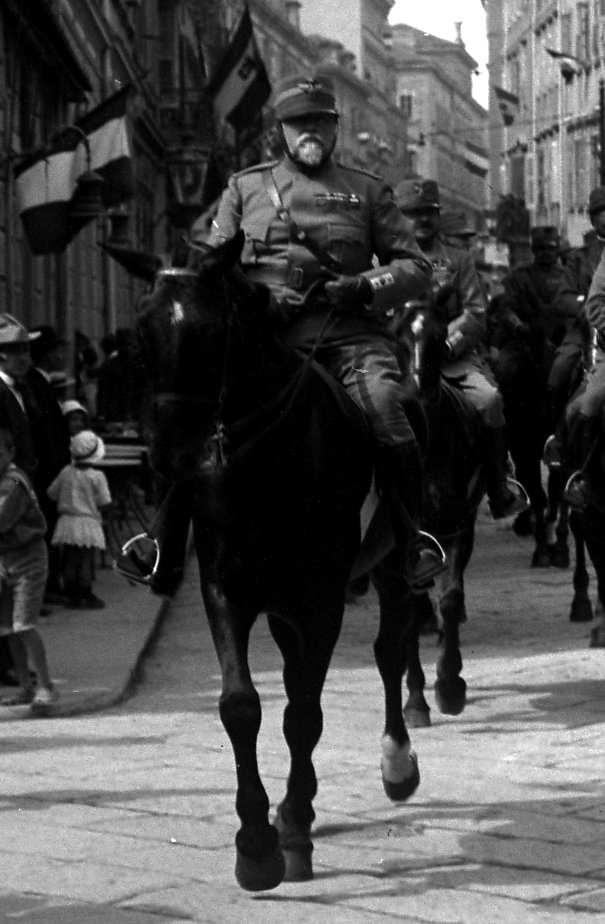
The evolution of the conflict in the last months of the war made it clear to the allied powers that they would no longer be able to obtain significant results: on 31 October the Austro-Hungarian generals and the Italian generals met at Villa Giusti, just outside Padua, to begin discussing the terms of peace. Italy proposed an armistice based on the demands of the Treaty of London: it requested the right for its army to occupy all Austro-Hungarian lands on the Adriatic littoral, the reduction of the army, the handover of 50% of the artillery, the immediate release of prisoners, and the return of German troops to Germany within two weeks. Charles I had no choice but to accept. The armistice was signed on 3 November 1918 and the ceasefire came into force the following day: thus the First World War ended on the Italian-Austrian front. While the talks at Villa Giusti were under way, however, the armies did not stop: the Austro-Hungarian army desperately tried to retreat while the Italian army pursued it in order to occupy as much territory as possible. Each army was assigned an area to reach across Veneto, Trentino, Alto Adige/South Tyrol and Friuli. On 3 November, the destroyer Audace docked at Molo San Carlo in Trieste, in front of Piazza Grande, later renamed Molo Audace and Piazza Unità d’Italia. It was the first Italian ship to reach Trieste, which had already been abandoned by the Austro-Hungarian governor two days earlier. The war would end definitively the following week, on 11 November 1918, with the signing of the armistice between the Allies and Germany.