


Osoppo Fort



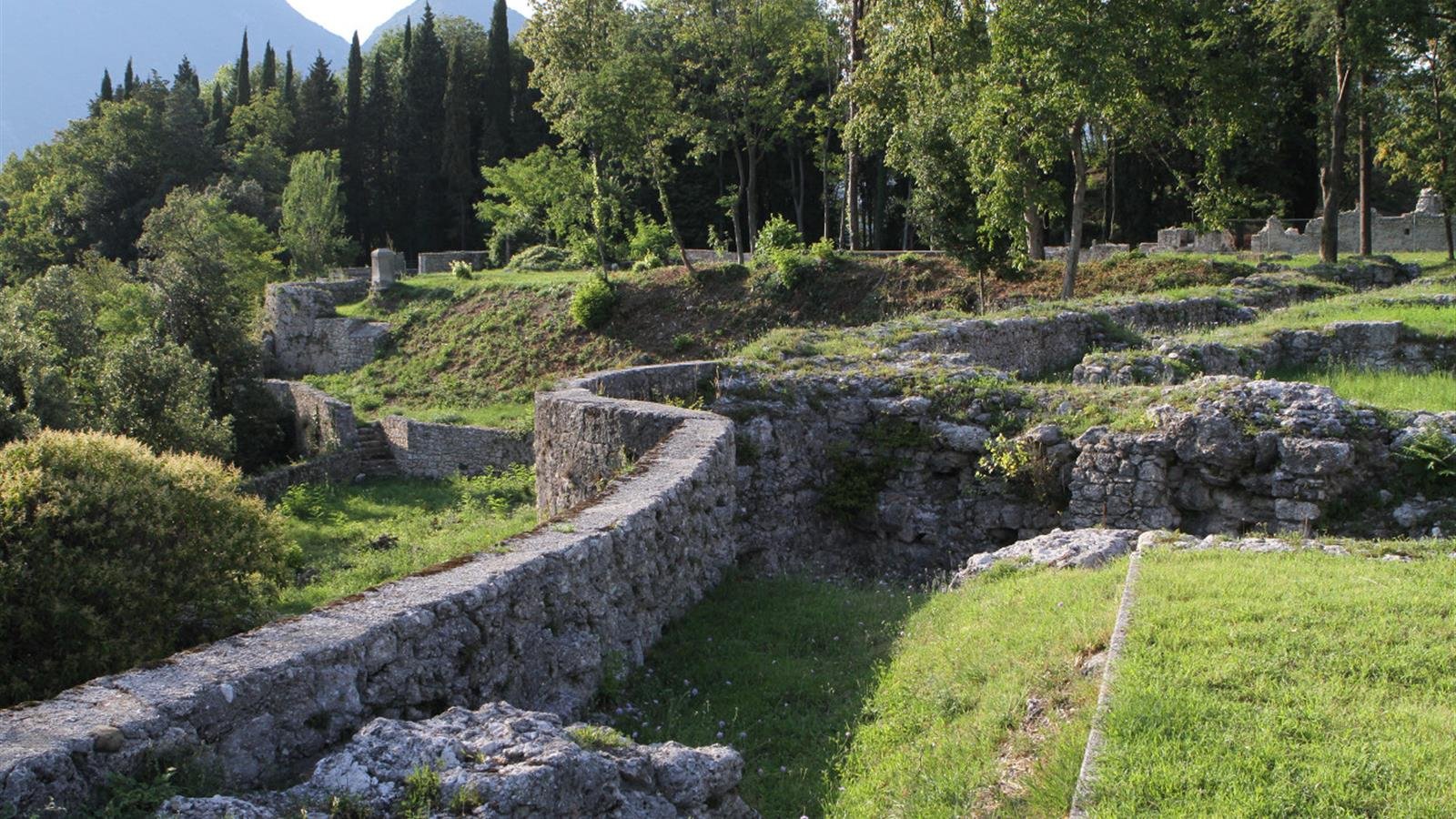
Osoppo Fort is today a landmark for the entire hilly and pre-alpine area of Friuli Venezia Giulia.
Declared a national monument in 1923, it was demilitarised in 1951 and now hosts several cultural events made especially evocative by the beautiful panorama over the Tagliamento River and the surrounding territory. Its charm and importance are indisputable also from the historical-tourist point of view: on this fort visitors can see remains dating both from the Great War period and from earlier centuries.
Its history begins at the end of the Middle Ages during the war between the Republic of Venice and the Habsburg Empire and extends to March 1848 when, during the revolutionary Risorgimento uprisings, Venice declared war on Austria and refounded the Republic of San Marco. The Friulians of the area succeeded in driving out the imperial garrisons stationed at Osoppo Fort and resisted their counter-offensive for almost seven months until October of that year. Later, in 1866, Friuli passed to the Kingdom of Italy and from 1909–1910 the fort was incorporated into the “Upper Tagliamento-Val Fella” fortress system after a programme of modernisation.

The site is reached by following the road built by Napoleonic troops at the beginning of the nineteenth century, which leads from the centre of Osoppo to the top of the fort. After passing through the entrance gate, on the right one can see an old artillery platform aimed towards the bed of the Tagliamento. Once at the top, on a large parade ground, the visit can begin by heading towards the panoramic point to the east and enjoying the beautiful view over Gemona del Friuli. A little further on, to the right, is the opening of what was once the main powder magazine of the whole complex.
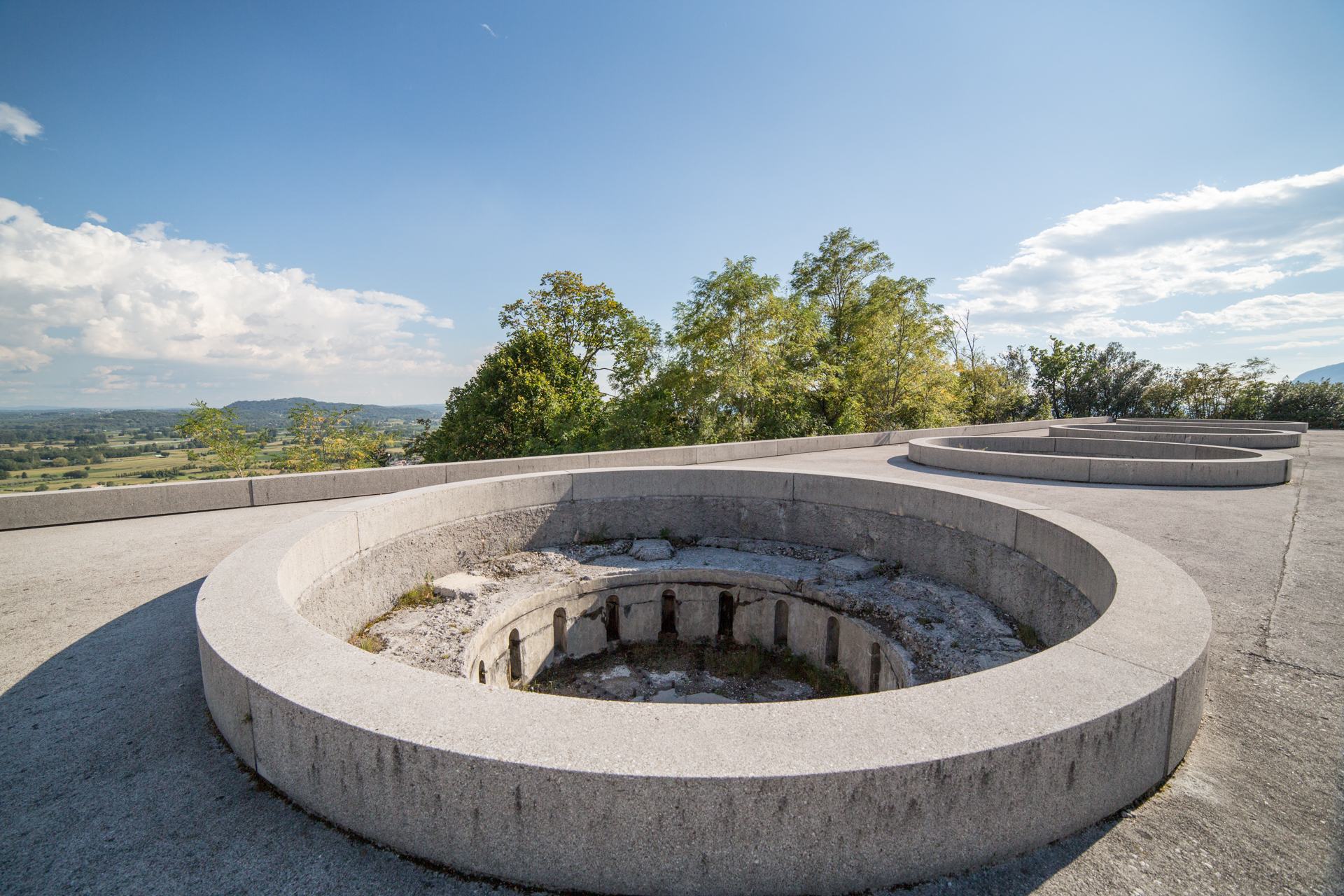
Returning towards the centre of the square but always following the southern side, the visit continues to the Osoppo-south Battery, which housed the four 149 mm cast-iron guns. To reach the platforms one has to pass through the long corridor built in the early twentieth century. On one side are the quarters, while on the other are the ready-use shelters that, by means of stairs, lead to the platforms where the guns had been mounted.
From this point an unpaved road leads back towards the square and then to the remains in the northern part of Osoppo Fort, higher than the rest of the structure. Several underground corridors lead to the area where the Osoppo-north Battery had been placed, with guns aimed towards the strategic bridge of Braulins. Not far away are the remains of a cave powder magazine, the aqueduct reservoir, the radiotelegraph station and the stables.

How to get there
Take the Gemona/Osoppo exit from the A23 motorway and continue towards Osoppo/Gemona del Friuli. After passing the junction near State Road SS13, continue along Regional Road SR463 “del Tagliamento” towards Osoppo/San Daniele del Friuli and, at the first set of traffic lights, turn right into Via Fabris. After about 150 metres, on the right, the ascent to Osoppo Fort begins. Large parking area available near the fort.