


Altar to the Fallen for Italy and Column to the Fallen for Austria-Hungary


Austria-Hungary, as is well known, was a multi-ethnic and multicultural state that also included areas with an Italian-speaking majority, such as today’s province of Gorizia.
At the outbreak of the war, some subjects who no longer identified with the Empire and believed in the Italianness of the lands where they lived chose to desert and enlist as volunteers in the Royal Italian Army.
These figures became popular and celebrated, especially during the Fascist regime, as examples of patriotism. For a long time it was believed that these volunteers had been very numerous, enough to justify, even afterwards, the Italian character of these territories. Later studies, however, disproved this belief.
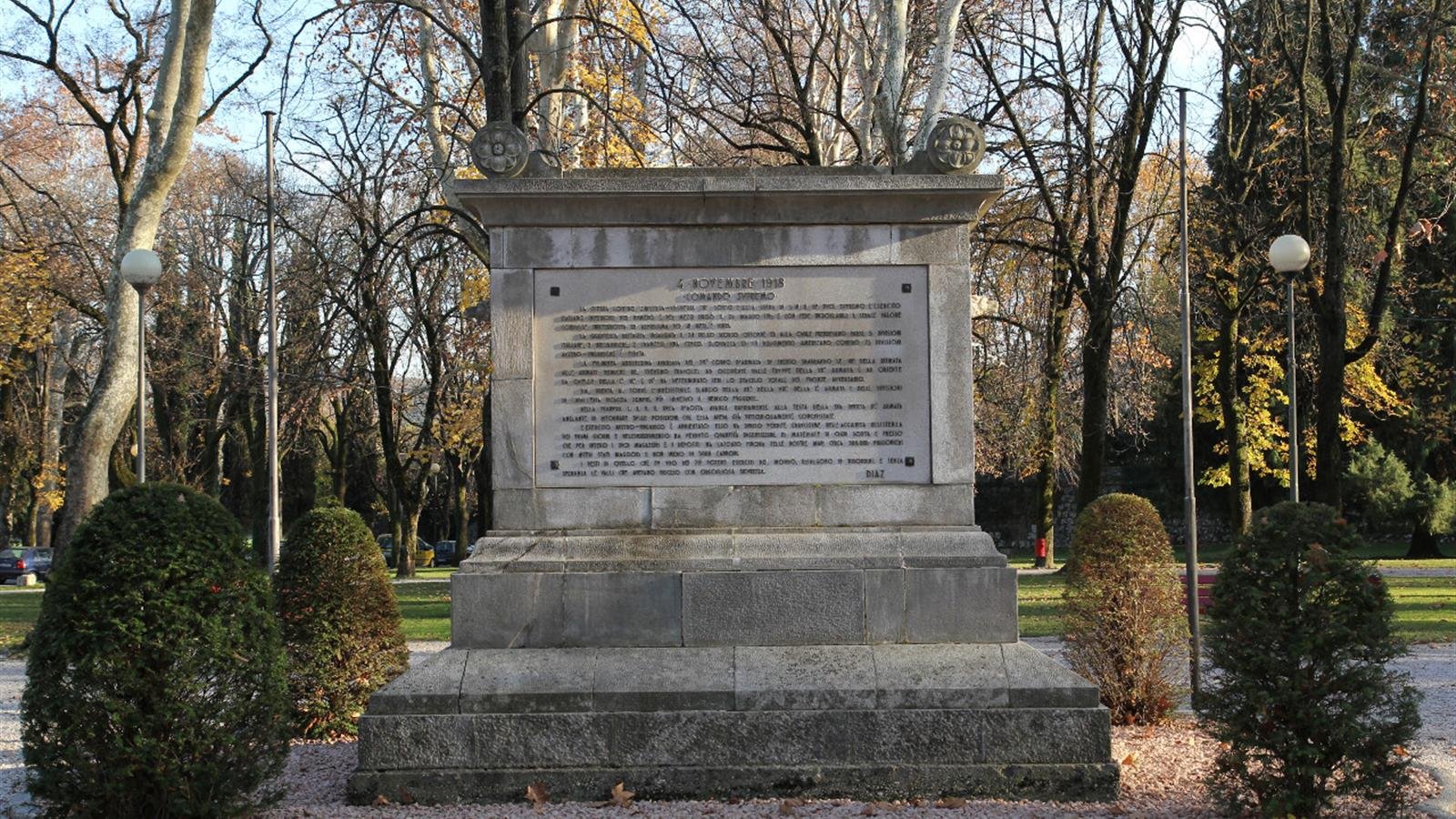
Near the fortress of Gradisca d’Isonzo, in the shade of ancient trees in the gardens between Via Regina Elena and Via Gorizia, stand two monuments that show just how complex the Great War was in Friuli Venezia Giulia. The altar dedicated to the men of Gradisca who fell for Italy and the column dedicated to those of Gradisca who fell for Austria-Hungary symbolically recall the fate of Habsburg subjects of Italian nationality.
On one side of the altar dedicated to those from Gradisca who fought for Italy are the names of five men, including the famous Antonio Bergamas, son of Maria—the woman who chose the coffin of the Unknown Soldier—and whose house still stands in the centre of Gradisca. On the opposite side, a long inscription signed by General Armando Diaz retraces the history of the Great War, especially the reconquest of eastern Veneto and the final capture of Friuli in 1918.
Beside it, in 2001, the municipality of Gradisca d’Isonzo placed a simple four-sided column to remember the men of Gradisca who had served in the Habsburg army during the Great War. Arranged alphabetically, the 90 names of young men who died between 1914 and 1918 can be read.

Information
Giardini Pubblici angolo Via Gorizia-Via Regina Elena
I-34072 Gradisca d'Isonzo (GO)