


Ara Pacis Mundi of Medea


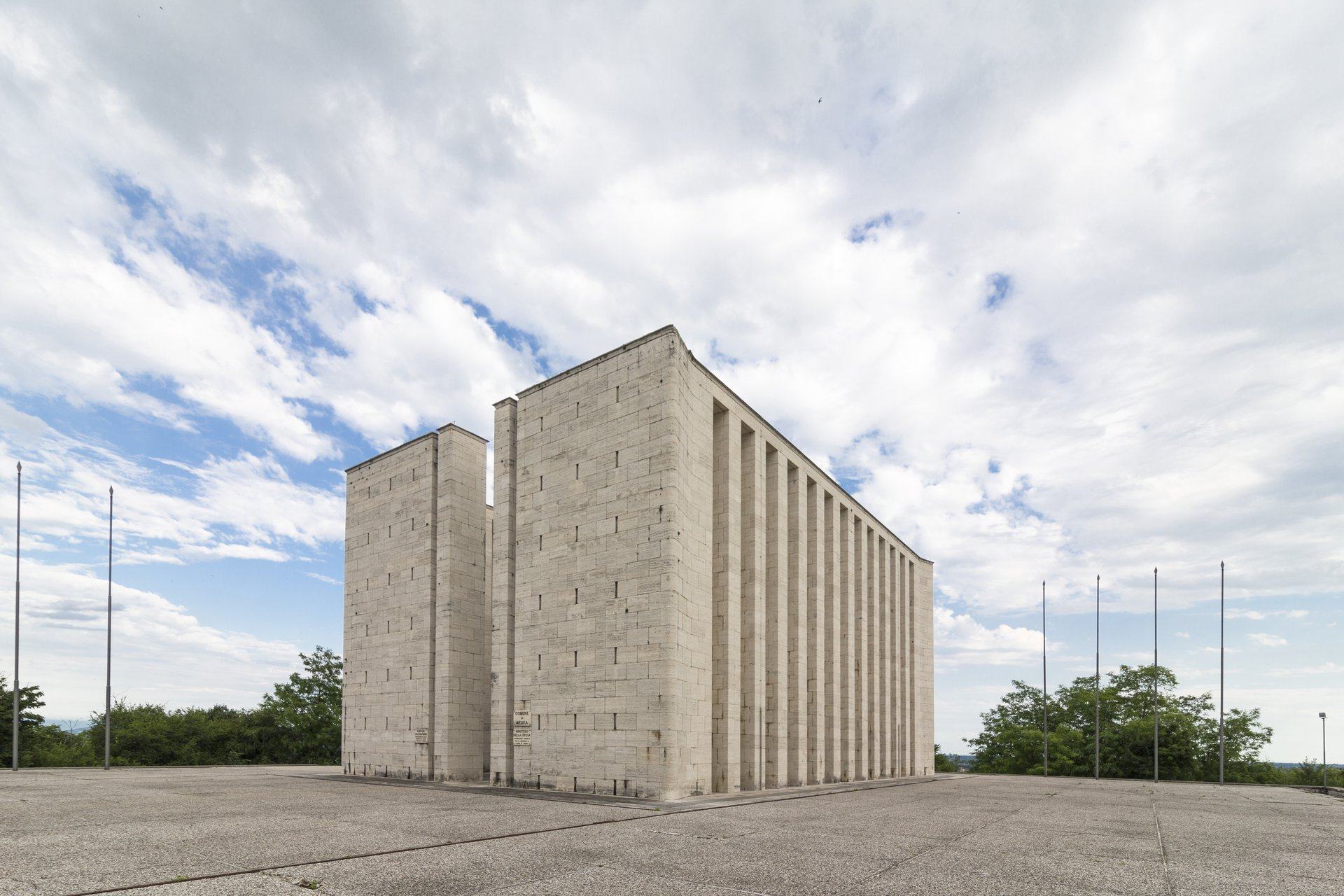
The Ara Pacis Mundi of Medea is a monumental complex created in memory of those who fell in all wars.
The initiative was launched in the aftermath of the Second World War by the “Promoting Committee for Honours at Redipuglia”, composed of the principal veterans’ associations and the Pontifical Assistance Commission. Through this monument, the aim was symbolically to guide humanity toward peace and brotherhood, overcoming the national resentment born of the war and preventing any future recourse to arms.
At first, Sant’Elia Hill was chosen as the site for the monument, but following pressure from several associations, it was ultimately built on the hill of Medea, a small village in the Friulian plain located halfway between Gorizia and Palmanova, which had already served as an observation point for King Victor Emmanuel III during the First World War. Construction began at the end of December 1950 on this hilltop, 140 metres above sea level, based on a design by the Milanese architect Mario Bacciocchi and under the direction of engineers Sirtori and Mocellini.
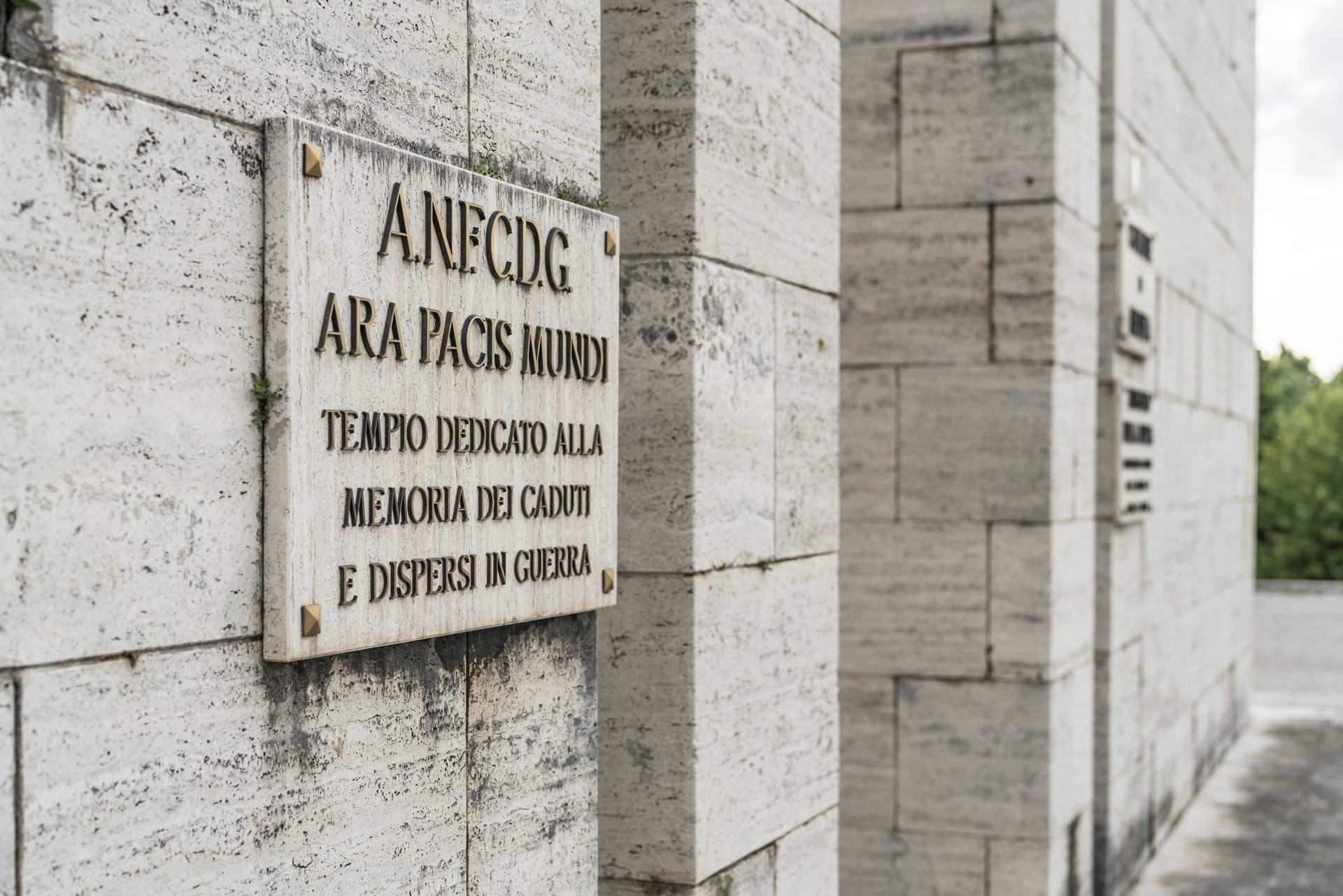
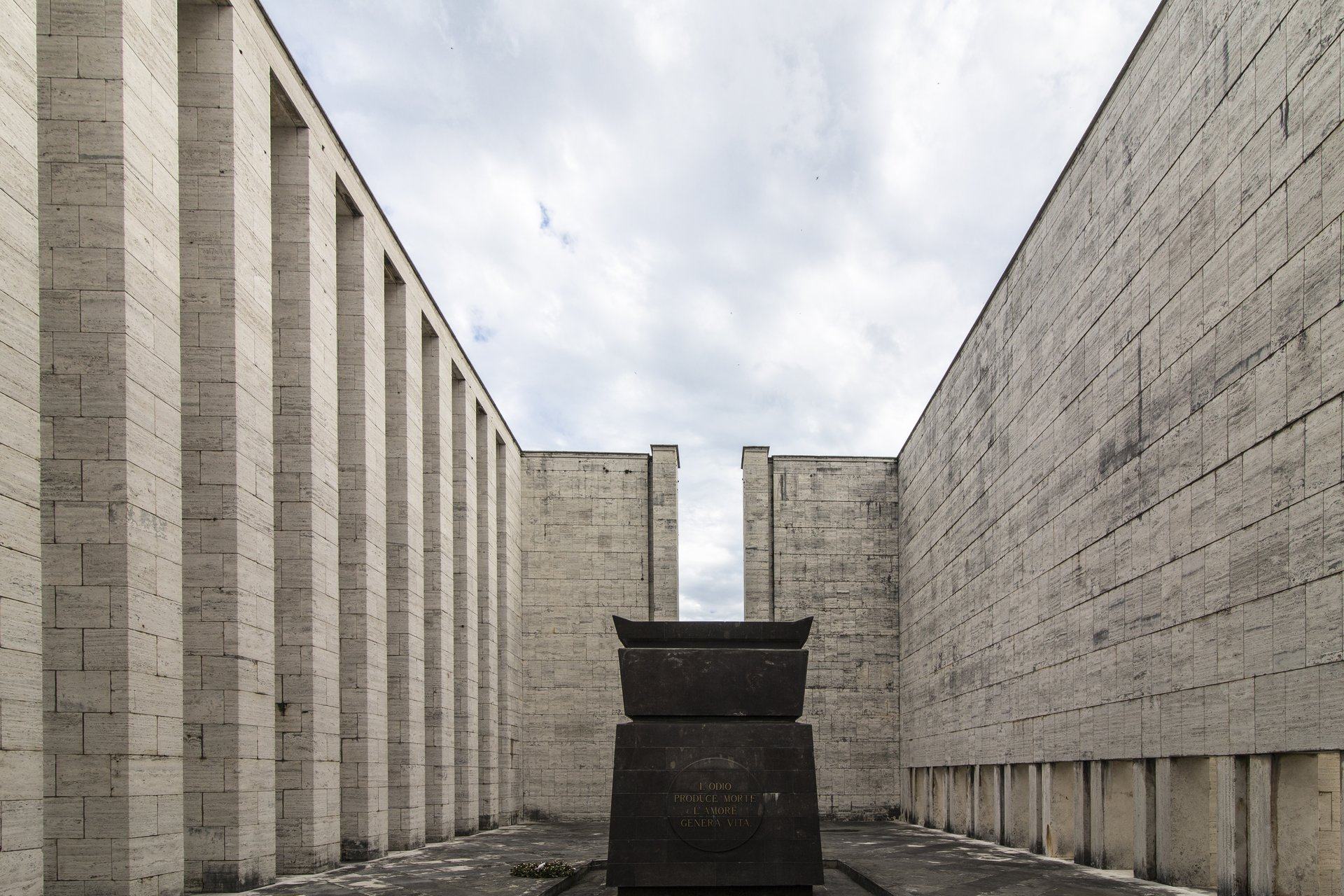
Remarkable for the materials employed, the structure covers an area of 1,500 square metres and was completed in less than six months. A staircase rising from the car park leads to the Ara Pacis Mundi, enclosed by a monumental travertine marble colonnade. The north and south sides open at the centre, while the eastern side consists of fourteen closely spaced pillars, each 13 metres high. At the centre stands the altar itself, made of porphyry from Val Camonica: square in shape, measuring three metres on each side and five metres in height.
The shrine preserves a wooden and bronze urn bearing the inscription “Odium parit mortem, vitam progignit amor” (Hatred brings death, love generates life). The urn contains soil collected from 800 war cemeteries in Italy, including foreign military cemeteries. It was blessed at the Altare della Patria in Rome and later transferred to Medea on 6 May 1951.

Information
Via Ara Pacis
I-34076 Medea (GO)