


Gun Galleries of Monte Fortin


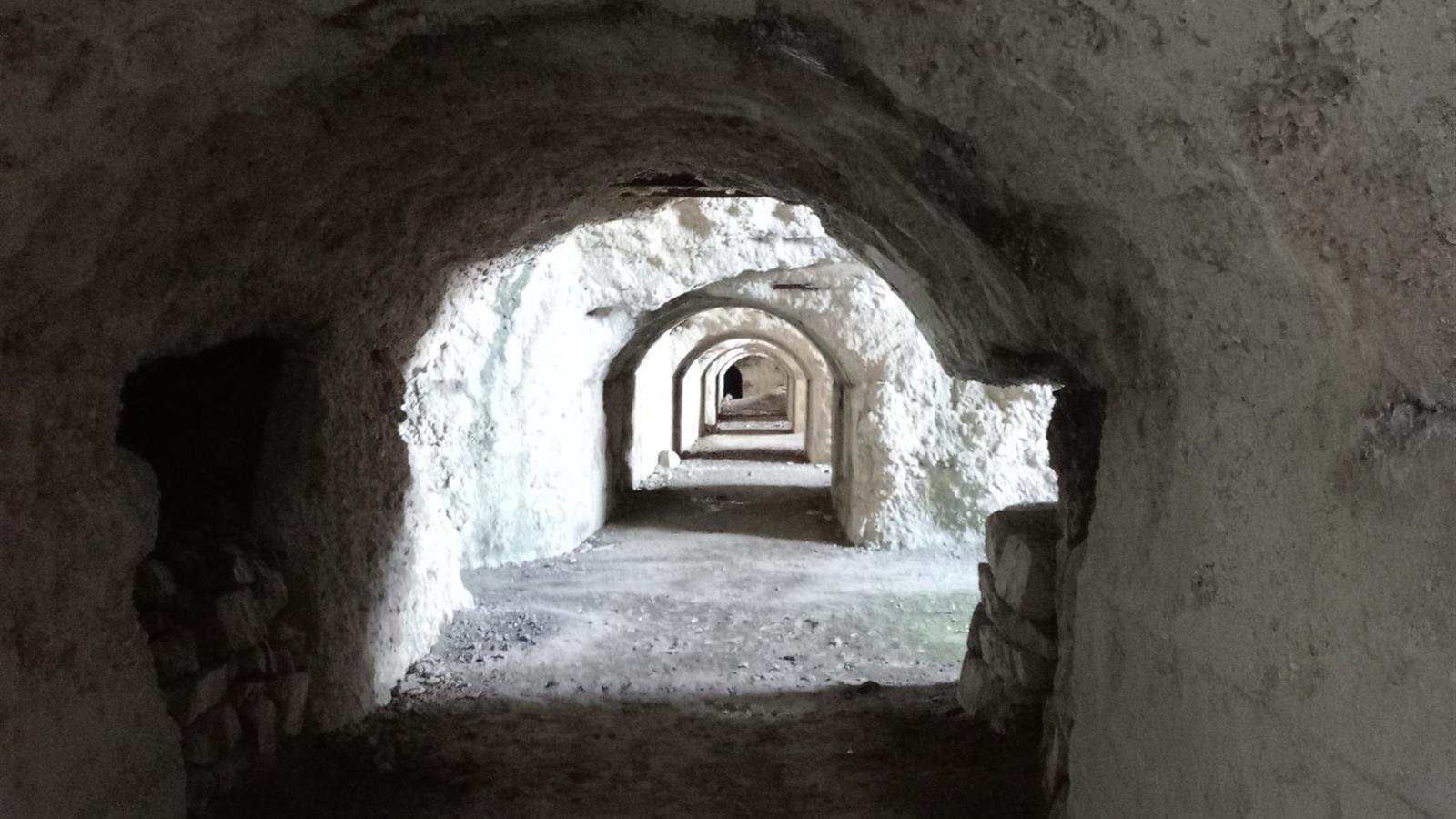
Monte Fortin, with its open views over the Collio hills and their internationally renowned vineyards, toward Gorizia—approximately eight kilometres away—as well as over Mount Sabotino, Mount Calvario, Mount San Michele, and the heights of the Karst, was considered a position of considerable strategic importance during the First World War.
Evidence of this importance can still be seen in the artillery tunnels excavated by the Royal Italian Army from 1915 onwards deep within the hill, which is composed entirely of marl sandstone. However, the shift of the front following the Sixth Battle of the Isonzo quickly rendered the structure obsolete, thereby contributing to its preservation.
The complex was created by excavating the friable sandstone of the hill and reinforcing it with concrete castings to ensure the stability of the vaults. The structure consists of two access galleries linking the eastern and western sides of the hill, intersected by a main gallery running from north to south. Along this principal tunnel are several artillery positions—one now obstructed—including three facing Gorizia, three directed toward the confluence of the Vipacco and Isonzo rivers, and three aimed toward Mount San Michele. These positions were further reinforced with reinforced-concrete entrances, designed to provide soldiers with effective protection against enemy artillery fire.
Outside, above entrance no. 3, stands the observation post from which the artillery batteries were directed; it is now inaccessible. Near the rear entrance no. 1 there were also three water collection basins used for the site’s water supply.
At the entrance to the tunnels, on the initiative and through the support of the Tenuta Villanova winery during the centenary commemorations of the Great War, a monument to peace entitled *Numquam in bello* (“Never in war”) was installed. Created by the artist Luigi Voltolina, it depicts two soldiers shaking hands while standing upon the remains of broken weapons.
