


Piazza Unità and Molo Audace



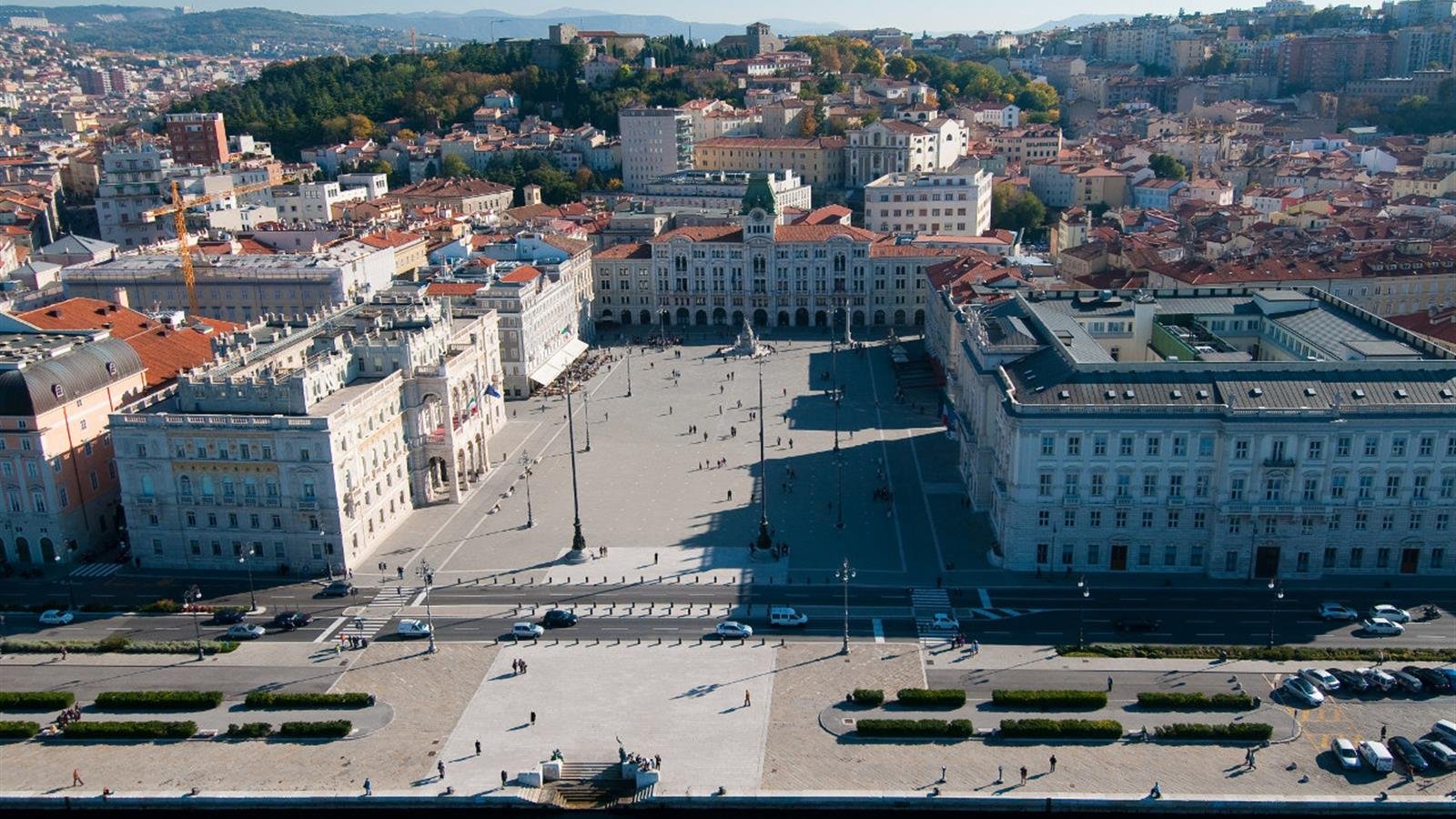
Non c'è dubbio che uno degli scorci più belli di Trieste sia Piazza Unità d'Italia. I palazzi che la circondano e l'apertura verso il Golfo di Trieste la rendono unica e affascinante sia di giorno che di notte, quando decine di luci bianche e blu la illuminano. Centro oggi della politica cittadina, la sua storia si collega a quella della Grande Guerra a partire dallo stesso nome.
During the Habsburg period it was simply called Piazza Grande and even had a garden. After 4 November 1918, its name was changed to Piazza Unità d’Italia to celebrate the city’s passage to the Kingdom of Italy, and the vegetation was replaced with stone paving.
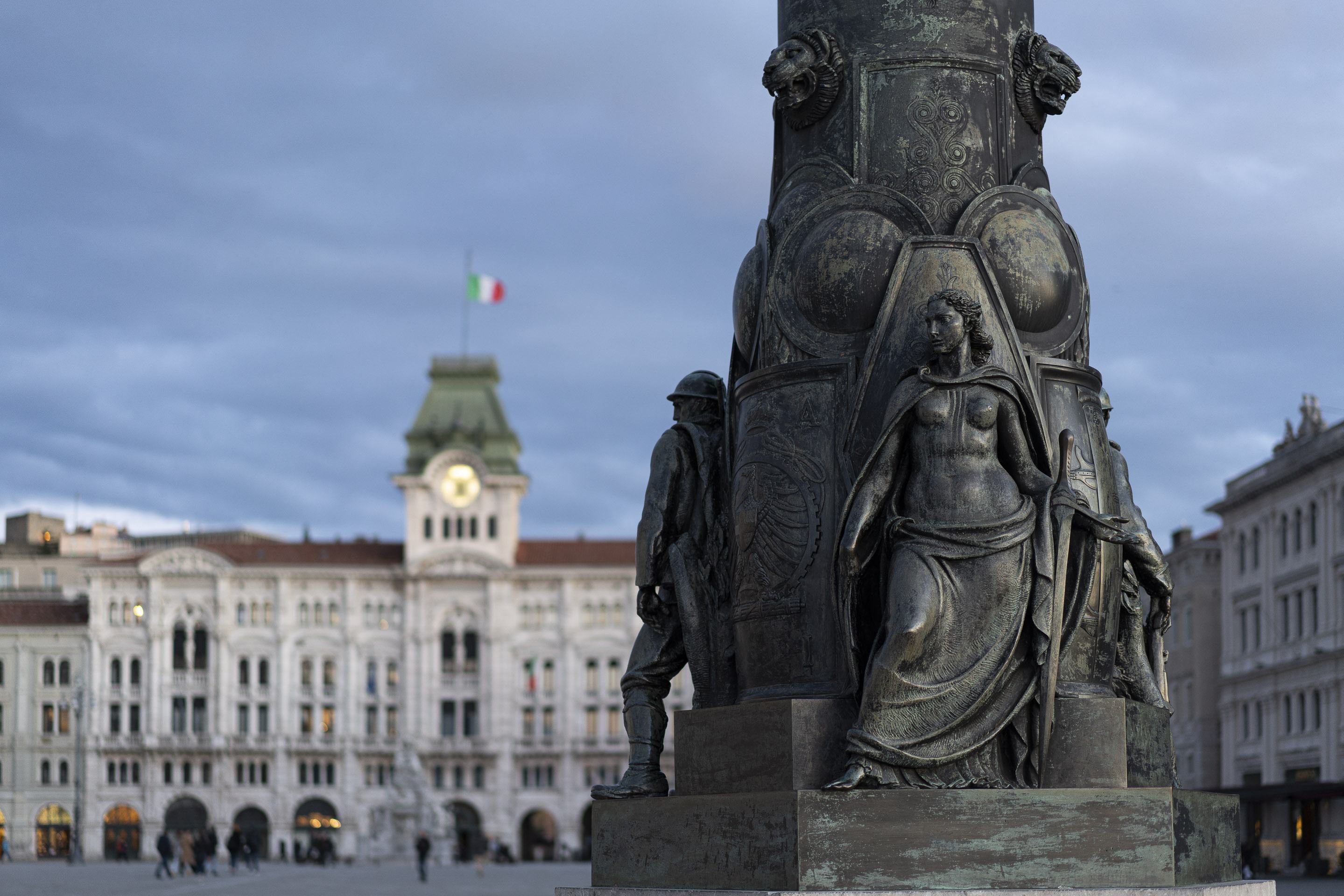
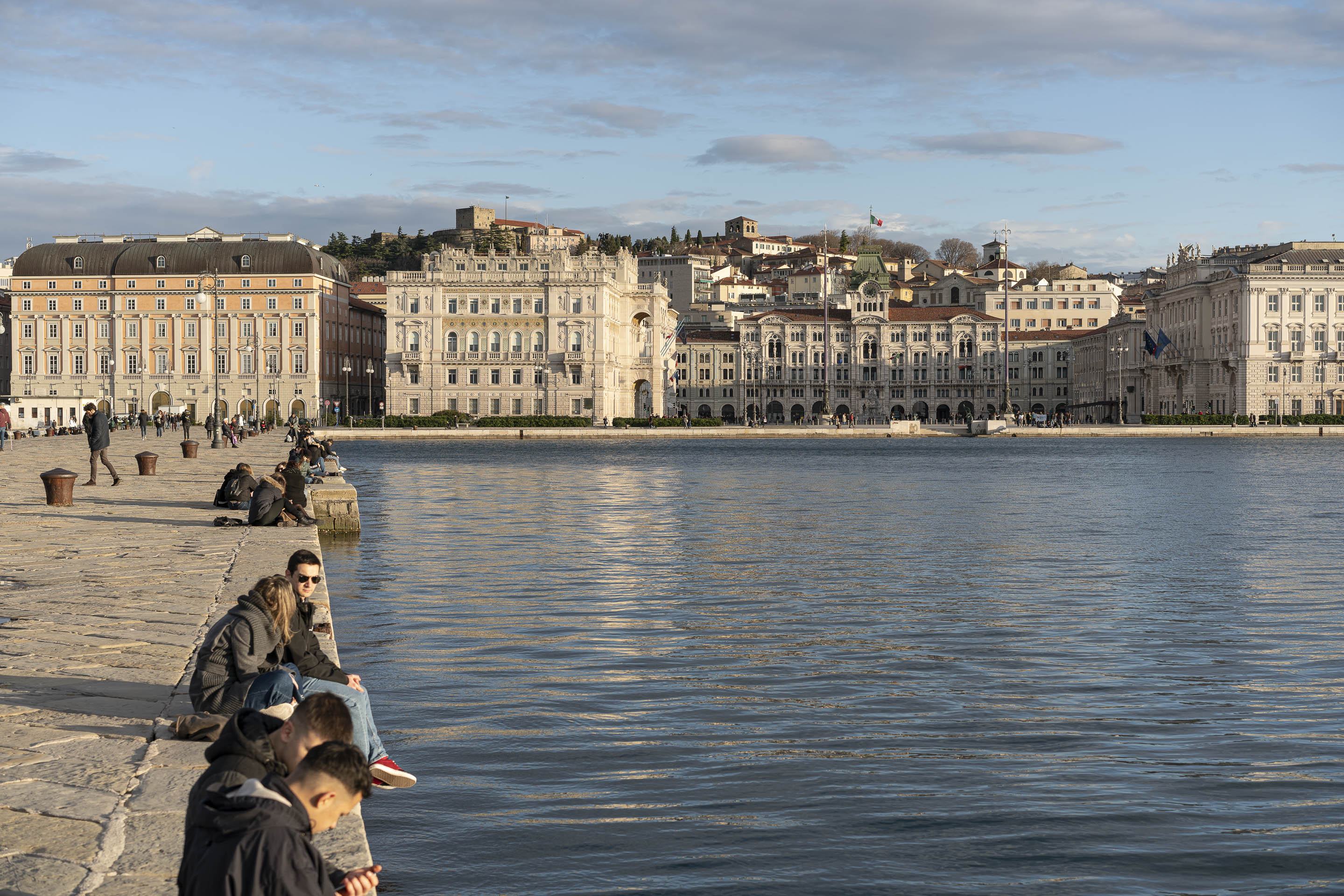
On the sea side of the square, in front of the former Austrian Lieutenant’s Palace, now the Prefecture, stand two 25-metre columns topped by halberds, the symbol of Trieste. At their base are statues by Attilio Selva depicting Italian army drivers.Facing the square and stretching out into the Gulf of Trieste is Molo Audace, an ideal place for a walk along the waterfront.
Formerly named after Saint Charles, the pier dates back to the mid-eighteenth century. On 3 November 1918 the Italian destroyer Audace, the first Italian ship to reach Trieste, docked here, and the pier was renamed in its honour.
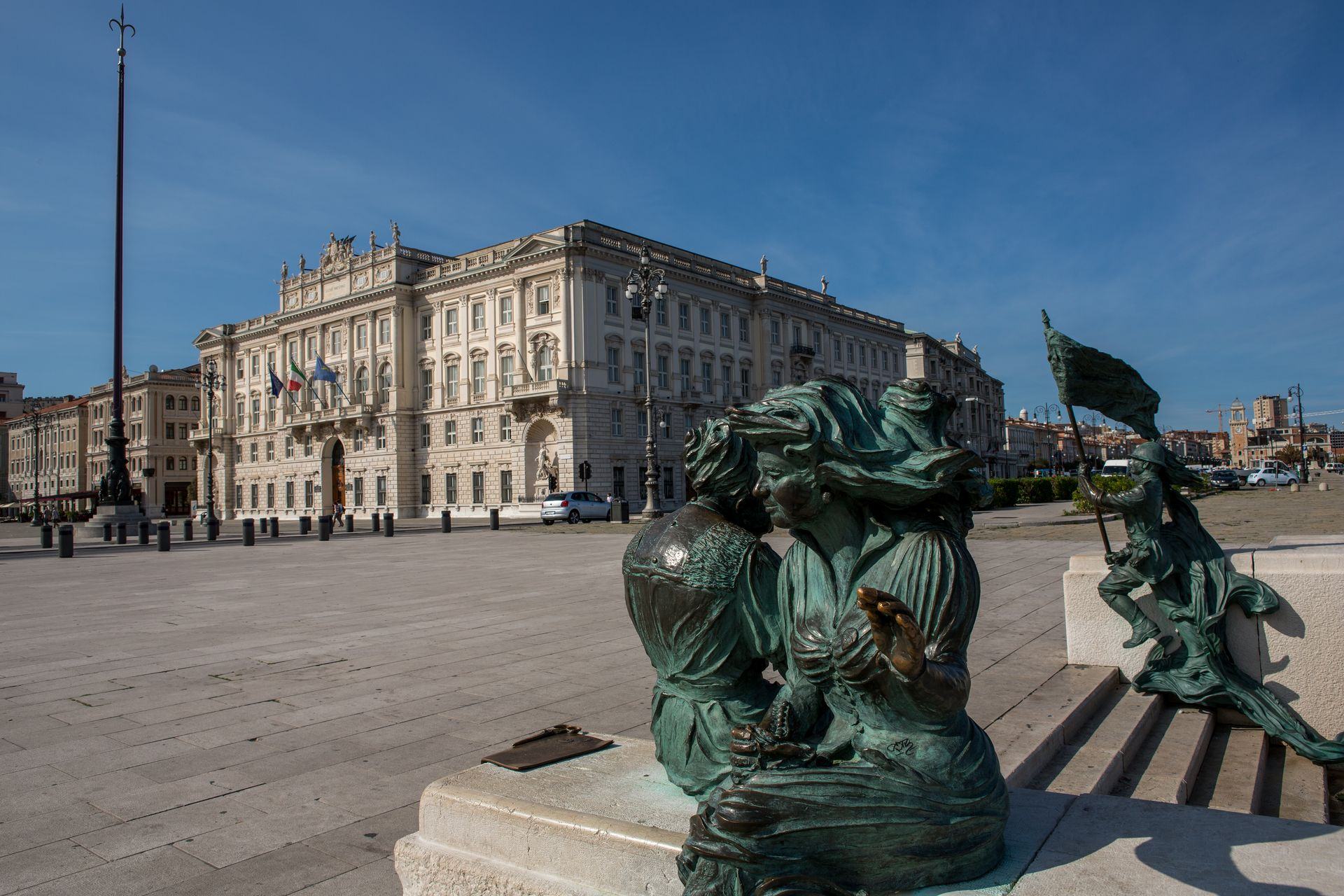
On the Riva Caduti per l’Italianità, finally, stands the so-called Scala Reale. In 2004, on the fiftieth anniversary of Trieste’s return to Italy after the Allied Military Government (1945–1954), statues by Fiorenzo Bacci were placed here: one depicts a bersagliere standard-bearer, the other the “girls of Trieste”, known as the “seamstresses”, sewing the Italian tricolour.

Information
Piazza Unità d'Italia
I-34121, Trieste