


Sant’Anna Monumental Cemetery in Trieste


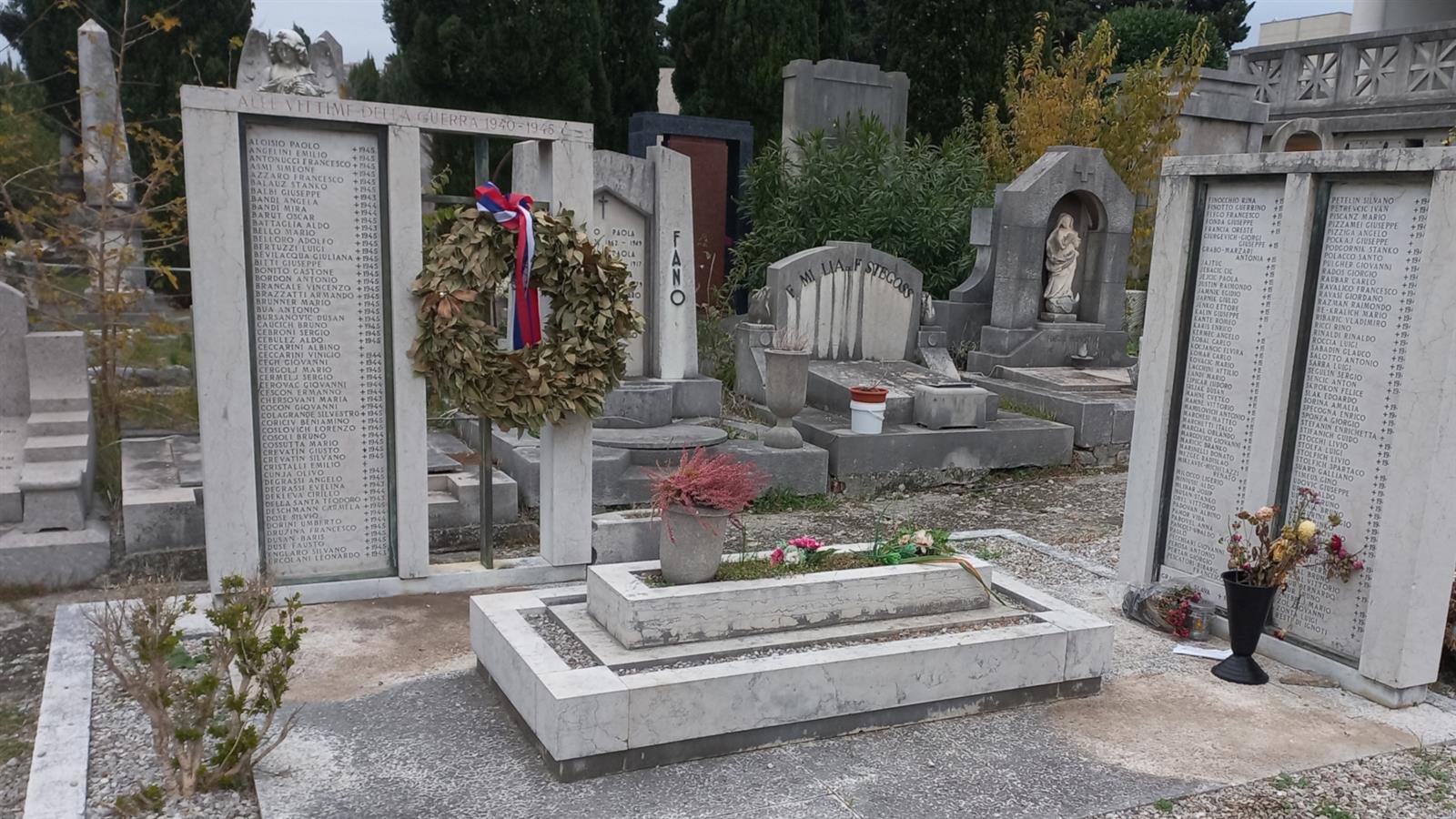
Between the nineteenth and twentieth centuries, Trieste experienced extraordinary demographic growth, expanding from around thirty thousand inhabitants to more than two hundred thousand on the eve of the Great War. The small local burial grounds had already become inadequate by the beginning of the nineteenth century, making the creation of a large new municipal cemetery necessary. In 1825, Sant’Anna Hill, on the outskirts of the city, was chosen for this purpose.
Today, Sant’Anna is a monumental cemetery, enriched by the burial grounds of other religious communities located outside its walls and by the former military cemetery, of which the section dedicated to British servicemen who died during the Allied Military Government (1945–1954) and the tomb of the Trieste collector Diego de Henriquez still remain. The latter gave his name to the Civic Museum of War for Peace.
Alongside the graves of many illustrious figures, including Umberto Saba and Italo Svevo, Sant’Anna Cemetery contains several tombs and funerary monuments connected with the Great War. Among them stands the Ara dei Caduti, commissioned by the Fascist regime and designed by the architect Carlo Polli. It was intended to replace the ossuary that contained the remains of the irredentist Guglielmo Oberdan and seventy-two volunteers who died during the First World War. In keeping with the ideology of the regime, the monument displays symbols linking the memory of the war to Fascism, including ancient Greek helmets, modern weapons and imperial eagles. The inscription engraved on it reads: “Like the heroes of Sparta, we returned on our shields.”
Not far away stands the tomb of the Stuparich family, where the brothers Giani and Carlo are buried. Carlo, an irredentist volunteer, died by suicide in 1916 during the Strafexpedition on Mount Cengio, on the Asiago plateau. Initially buried at the place of his death, his body was transferred here in 1929 during a solemn ceremony. The monument, created by the sculptors Ruggero Rovan and Ramiro Meng, consists of three blocks of Karst stone placed at the top of a small staircase, forming a kind of arch engraved with the names of the dead and commemorative inscriptions. At the centre of the arch stands the large rock from Mount Cengio behind which Carlo, on 30 May 1916, took his own life, aware of the fate awaiting him should he fall into Austro-Hungarian hands and be recognised as a deserter.

Infos
Via dell'Istria, 206
I-34145 Trieste
0039 0406751
For information on opening hours and visiting arrangements, please visit the website