


Cemetery of Heroes of Aquileia


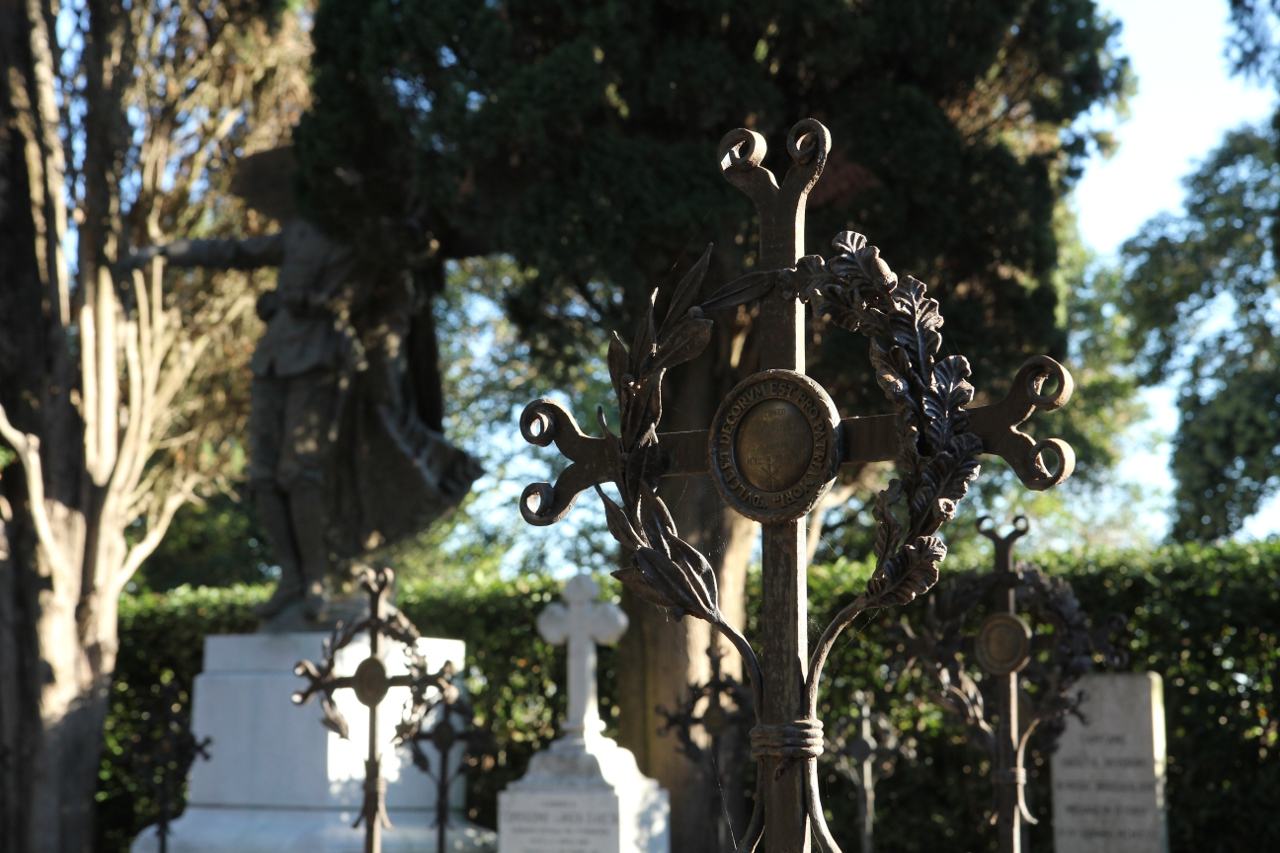
The Heroes’ Cemetery of Aquileia, created in the heart of the city of Roman origin from 1915 onward, lies beside the famous Basilica of Santa Maria Assunta.
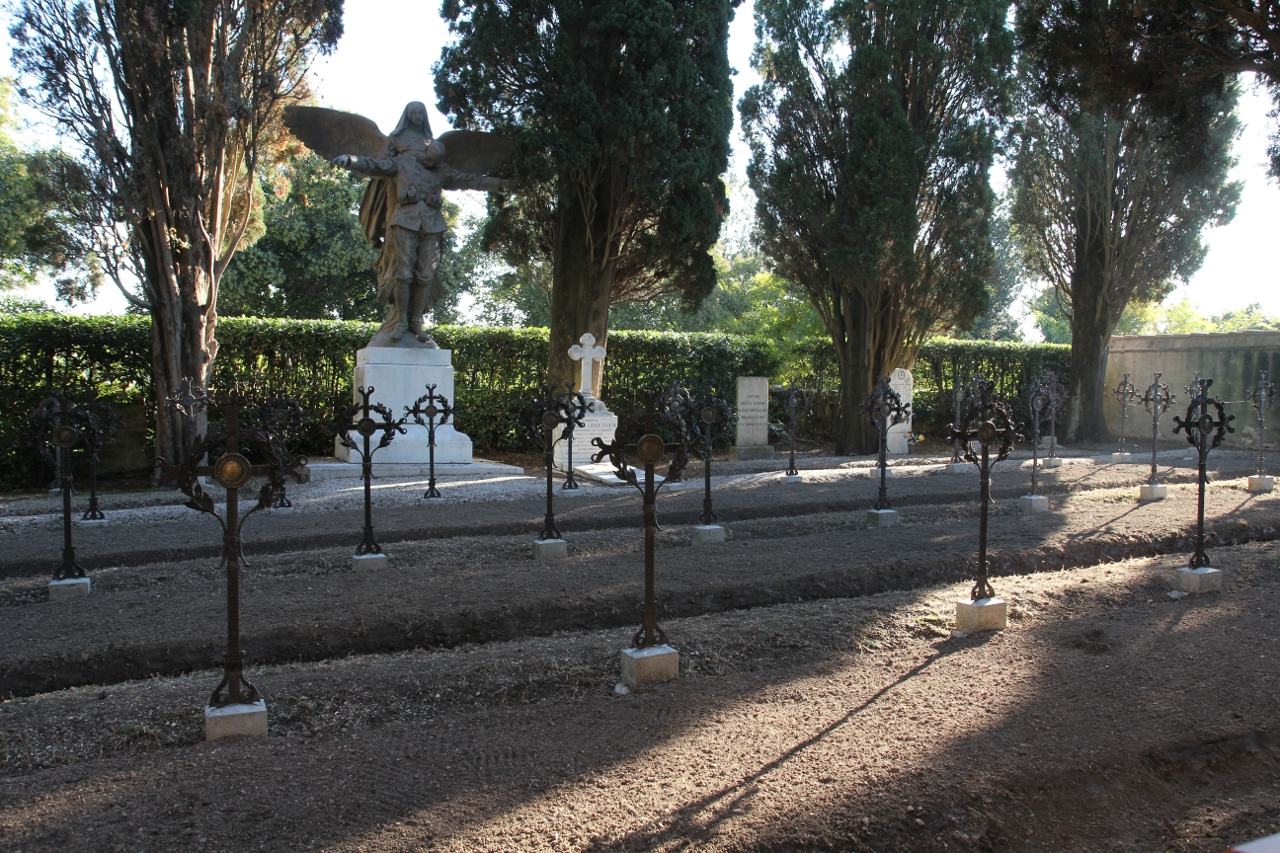
It is a very important historic site because, unlike other cemeteries, it is the only one to have preserved the characteristic features of the original wartime layout. Moreover, it was precisely from this place that the commemorative journey began in 1921 which brought the body of the Unknown Soldier to the Altar of the Fatherland.
Aquileia was part of the Austro-Hungarian Empire, which is why the war began here as early as the summer of 1914. At the end of May 1915, shortly after the Kingdom of Italy entered the conflict, the first bersaglieri units entered the city and then moved on towards Grado, the Isonzo and Monfalcone. The patriarchal city thus became one of the rear areas of the Karst front and the first soldiers began to be buried in the cemetery beside the basilica.
The order of the graves is due to the work of Don Celso Costantini, priest of Aquileia in those years, who took care to give the soldiers a dignified burial. He had flowers brought from Concordia Sagittaria (Venice) and received hedges and trees as a gift from the Municipality of Florence. Every grave is marked by an iron cross adorned with intertwined laurel and oak, donated by the Dante Alighieri association and made by the sculptor Alberto Calligaris. Each cross bears the Horatian quotation “Dulce et decorum est pro Patria mori” (“It is sweet and honourable to die for one’s country”) and the personal details of the fallen soldier.
The Heroes’ Cemetery also contains several monumental works. These include the arcosolium—a sarcophagus set into a niche—which holds the ten unknown soldiers buried here on 4 November 1921, and the tomb of Maria Bergamas, the mother who chose the coffin to be transferred to the Altar of the Fatherland. There are also the tombs of Giovanni Randaccio, commander of the "Lupi di Toscana", and Major General Alessandro Ricordi, commander of the Murge Brigade.
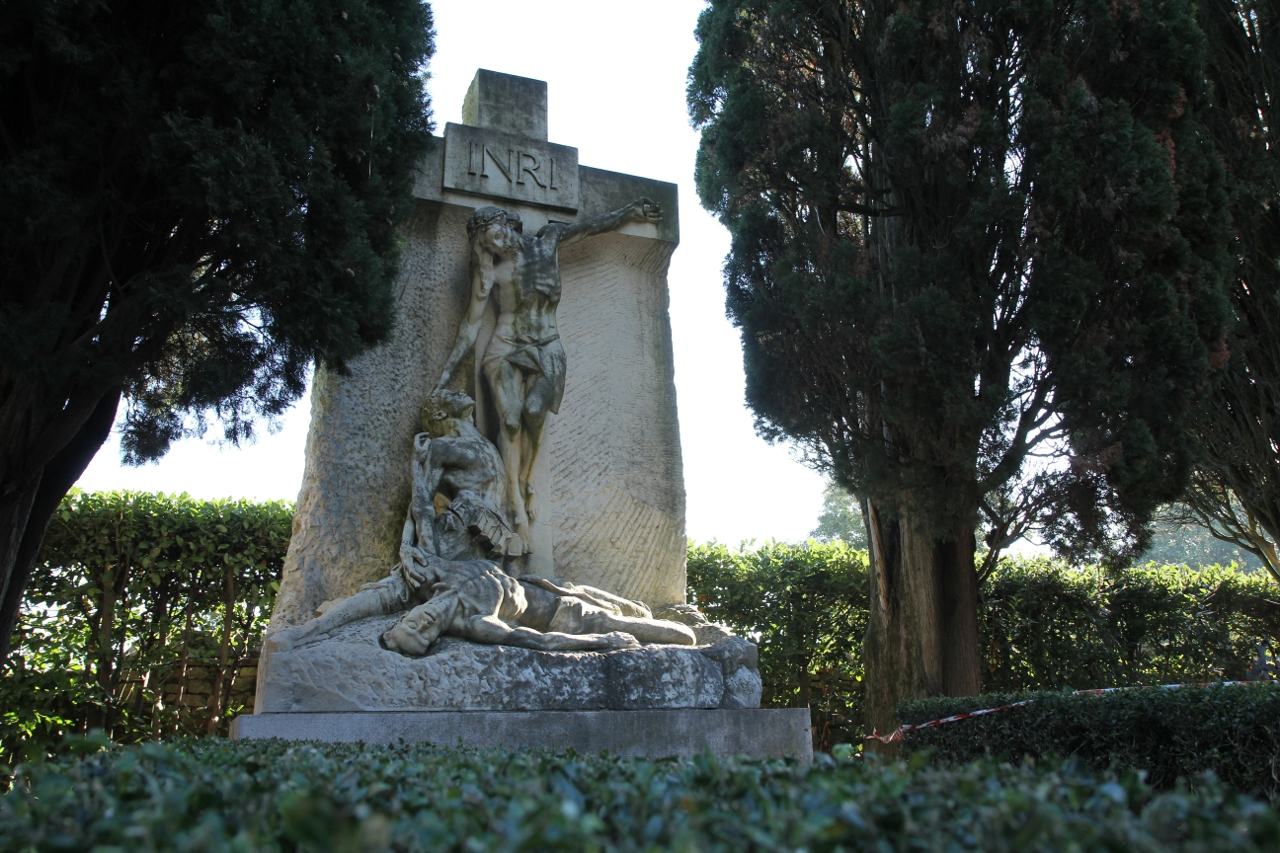
Finally, the presence of several sculptures makes this war cemetery, set among majestic Roman and early medieval remains, even more evocative. They include “The Crucifix and the Sacrifice of the Combatant” by Edmondo Furlan (1921), depicting Christ stepping away from the cross to comfort a dying soldier at his feet, flanked by a fallen comrade, and “The Angel of Charity” by Ettore Ximenes (1917), a bronze showing a dying soldier supported by a winged Angel with the features of a Red Cross nurse. Lastly, on the wall of the basilica one can read the lyric “O Aquileia” by Gabriele d’Annunzio, placed there on 2 November 1915, erased by the Austro-Hungarians after the Caporetto retreat and re-carved once hostilities had ended in November 1918.

Information
Piazza Capitolo (behind the Basilica)
I-33051 Aquileia (UD)