


Column of Redemption in Gradisca d’Isonzo


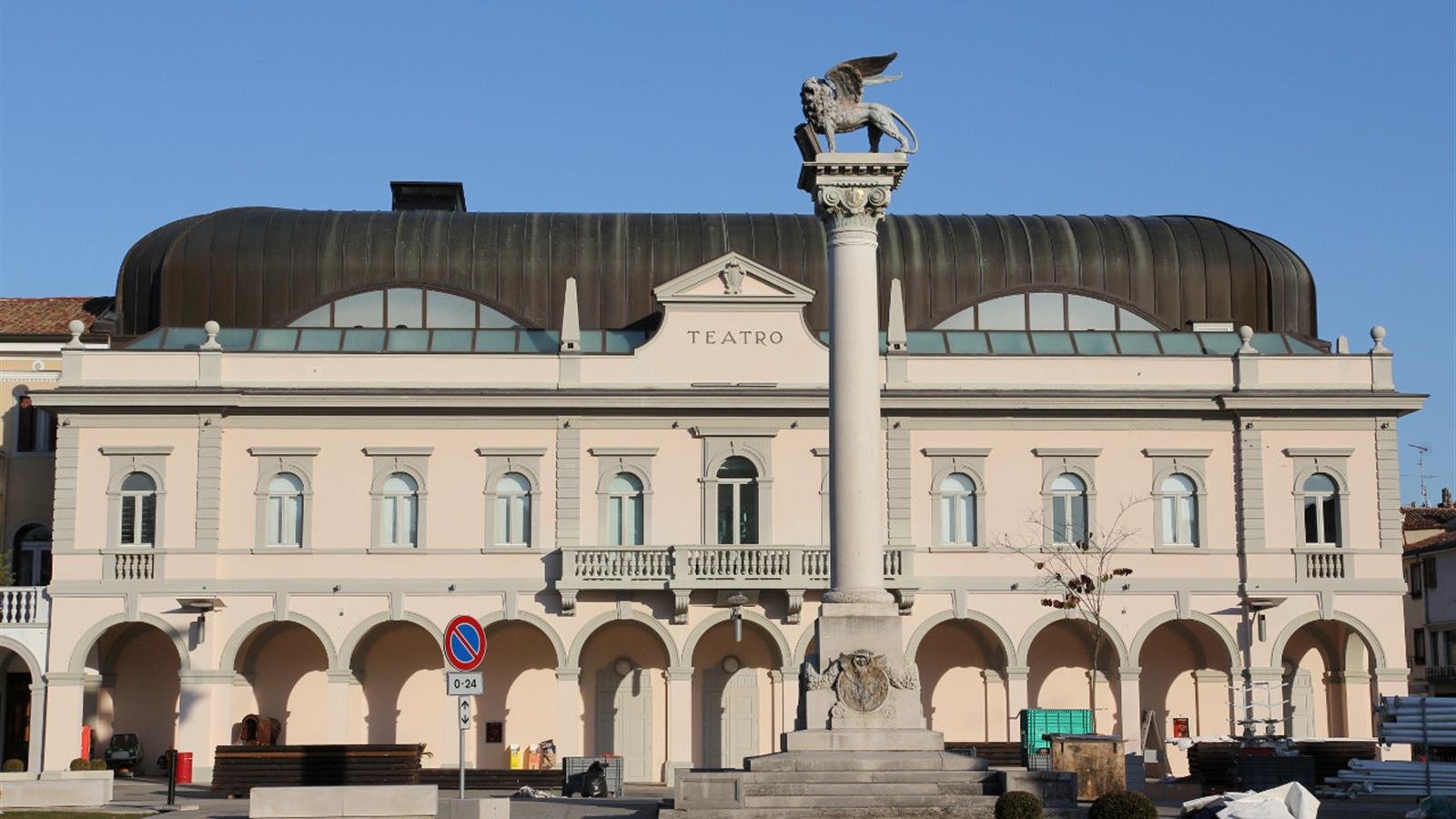
In the heart of the province of Gorizia, not far from the Redipuglia Shrine and the open-air museums of Monte Sei Busi and Monte San Michele, lies the town of Gradisca d’Isonzo.
Originally a small agricultural settlement belonging to the Patriarchate of Aquileia during the Middle Ages, it was annexed to the Republic of Venice in 1420, which later transformed it into a fortress against Turkish incursions. In 1511 it passed to the Habsburg Empire and gradually became an increasingly important centre, even serving as the capital of the county bearing its name.
During the nineteenth century, once the threat of invasion had receded, the defensive walls and bastions were dismantled, turning Gradisca into a lively town of leisure with spacious gardens, cafés, and clubs, in keeping with the spirit of the Belle Époque up to the outbreak of the Great War. Like all the territories belonging to Austria-Hungary, Gradisca entered the conflict in the summer of 1914. Captured by the Italian army and later set on fire during the retreat following the Battle of Caporetto, the town was left almost completely destroyed.
This history spanning nearly five centuries is symbolically represented in the Column of Redemption, a work by the sculptor Giovanni Battista Novelli, inaugurated in 1924 in Piazzale Unità d’Italia in front of the theatre. The monument consists of a cubic base decorated with four bas-reliefs, one on each side, while at the top of the approximately ten-metre-high column stands the Lion of Saint Mark with the book open, symbolising Venetian sovereignty.
Each bas-relief is accompanied by a date and commemorates one of the four most significant moments in the history of Gradisca: 1470–1499, recalling the threat of Turkish incursions; the construction of the fortress beginning in 1479; the period of Habsburg rule from 1511 to 1915; and finally the Great War, represented by a Winged Victory and the date 4 November 1918.

Information
Piazzale dell'Unità d'Italia
I-34072 Gradisca d'Isonzo (GO)