


Fort Hensel



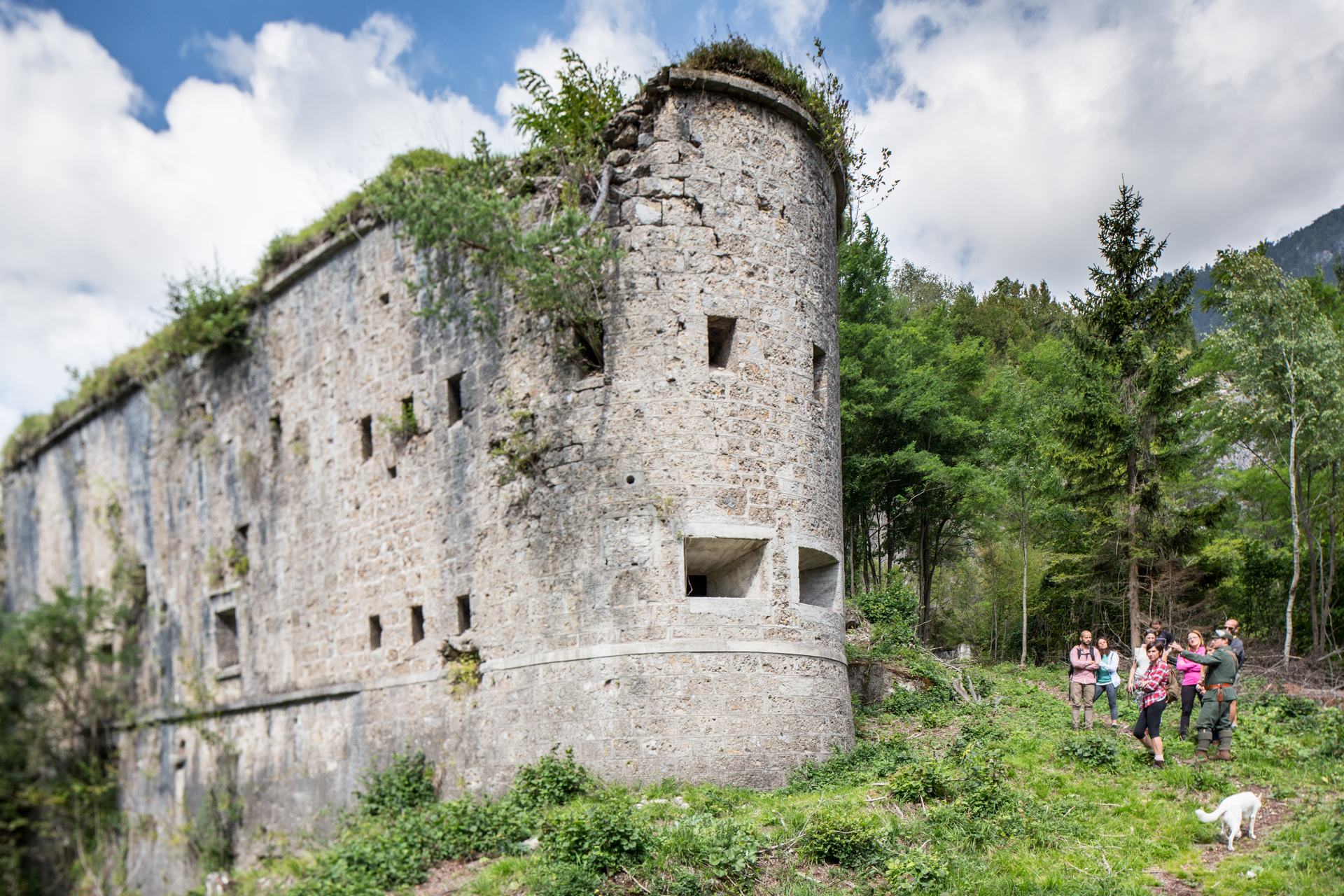
One of the most important strongholds of the Austro-Hungarian defensive system was Fort Hensel, a structure built in 1809 on the Tschalawài promontory near the village of Malborghetto.
The construction was designed by the engineer captain Friedrich Hensel in the middle of the Napoleonic age, while French troops were moving up the Friulian valleys towards the northern border. Between 15 and 17 May of that year the two armies clashed and the fort was captured by the French.
Once the Napoleonic danger had passed, a new fort was erected in 1848 but was then demolished in 1882, when it was decided to build another, more modern one, because of the attention that the Kingdom of Italy was now paying to this frontier. The building was finally restored in the early twentieth century: the modernisation transformed it into an important fortress capable of housing 18 artillery pieces for 360-degree defence. It was named Hensel in honour of its founder, who had died defending it in May 1809. Inactive for thirty years, with the outbreak of the First World War it had a garrison of 21 officers and 567 soldiers.
The fort consisted of two buildings fifty metres apart: Block A, in the higher position, housed a barracks, two howitzer batteries and a two-storey bastion with four guns, while Block B consisted of two turrets with two guns each and a battery with another four guns. Considered well armed, Fort Hensel became one of the main targets of the Italian artillery deployed along Val Dogna. In the summer of 1915 more than two thousand large-calibre shells were fired at it and, over the whole war, about 4,500 in total, reducing the fort to a heap of rubble.
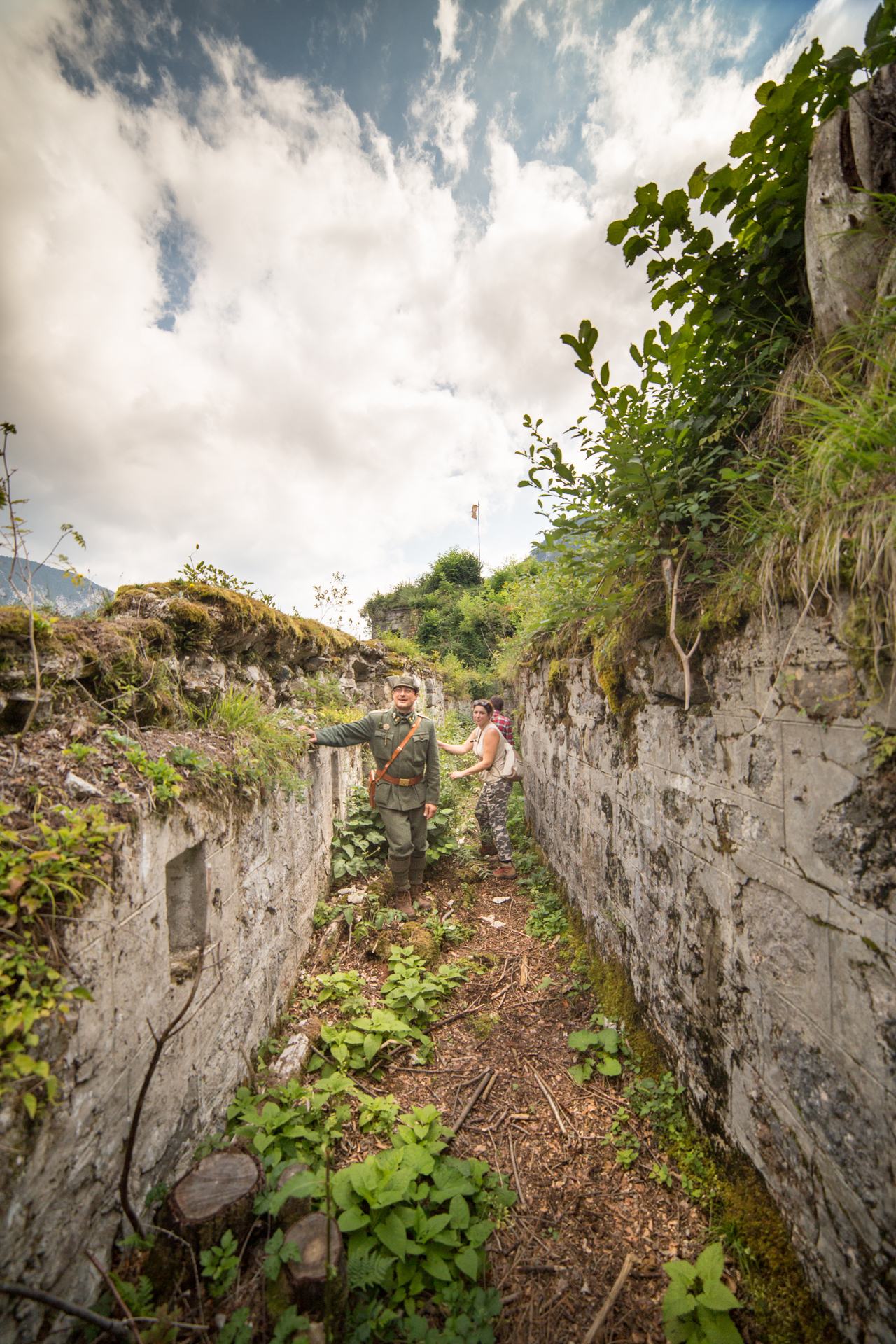
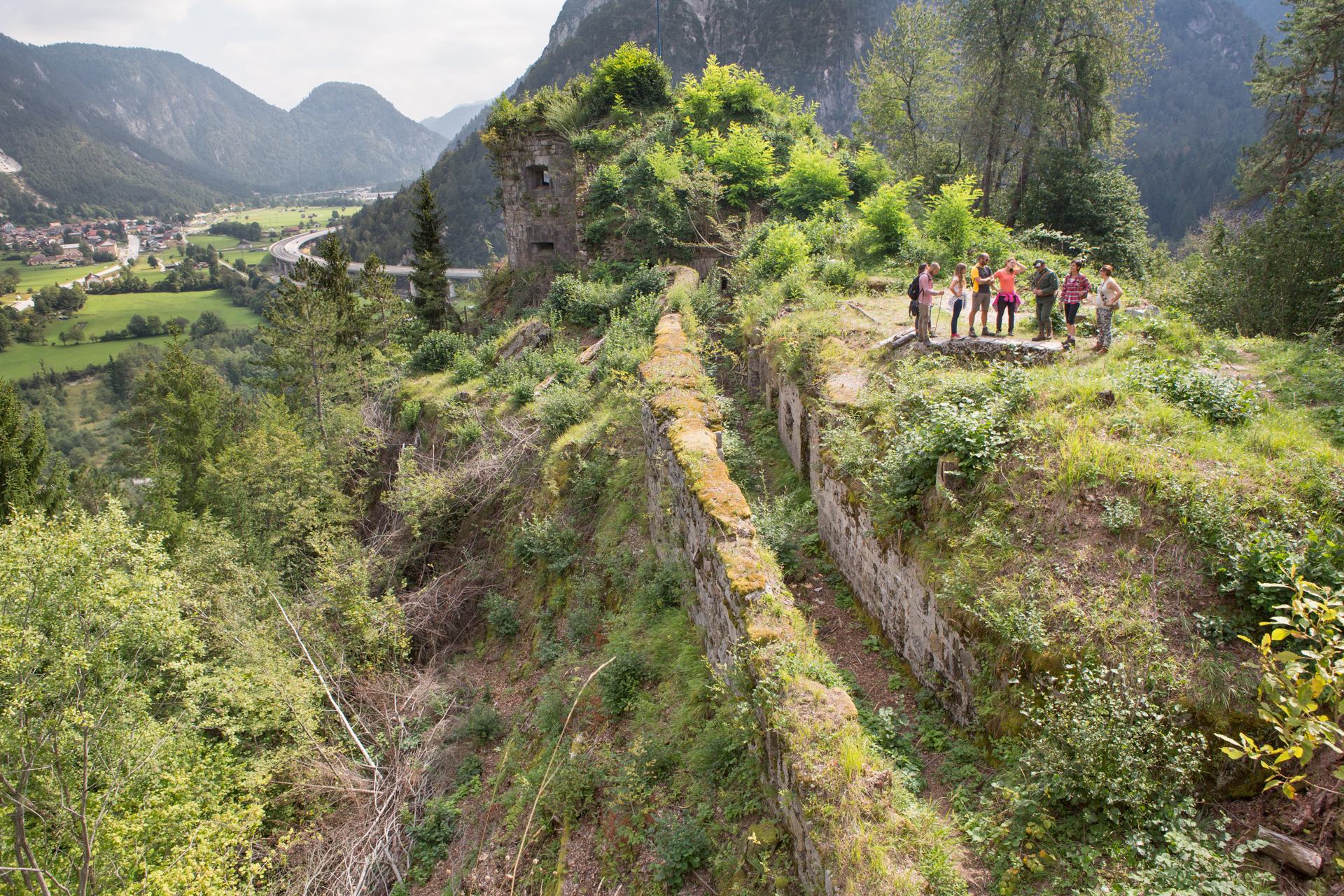
Today, among the dense vegetation of the promontory, several remains of these structures are still visible. The visit begins in the small rest area along state road SS13 after passing through the village of Malborghetto. On the rocky wall of the promontory the monument of the “Lion of Hensel” is clearly visible, the statue of a dying lion pierced by a spear in memory of the Austrian captain who died fighting the Napoleonic army. On the plaque behind it, in German, one can read: “In memory of the heroic death of engineer captain Friedrich Hensel on 17 May 1809 and of his comrades in battle, who fell with him”.
On the opposite side, along the old SS13, lies the start of the local “Sentiero della Pace”. Here begins the Fort Hensel Thematic Park, which develops along trails accessible to everyone and enriched with explanatory panels and period photographs. Visitors can also use the MACA Project which, thanks to QR codes, allows them to explore the history of the site in greater depth.

How to get there
Take the Pontebba exit from the A23 motorway and continue along State Road SS13 towards Malborghetto/Tarvisio. After passing through the village of Malborghetto, leave your car in the parking area on the left, shortly after the “Forte” tunnel.